Resume

Learn how to craft winning resumes with Resumeist’s blog. Get tips, templates, and career insights to showcase your skills and land your next job.

Resume

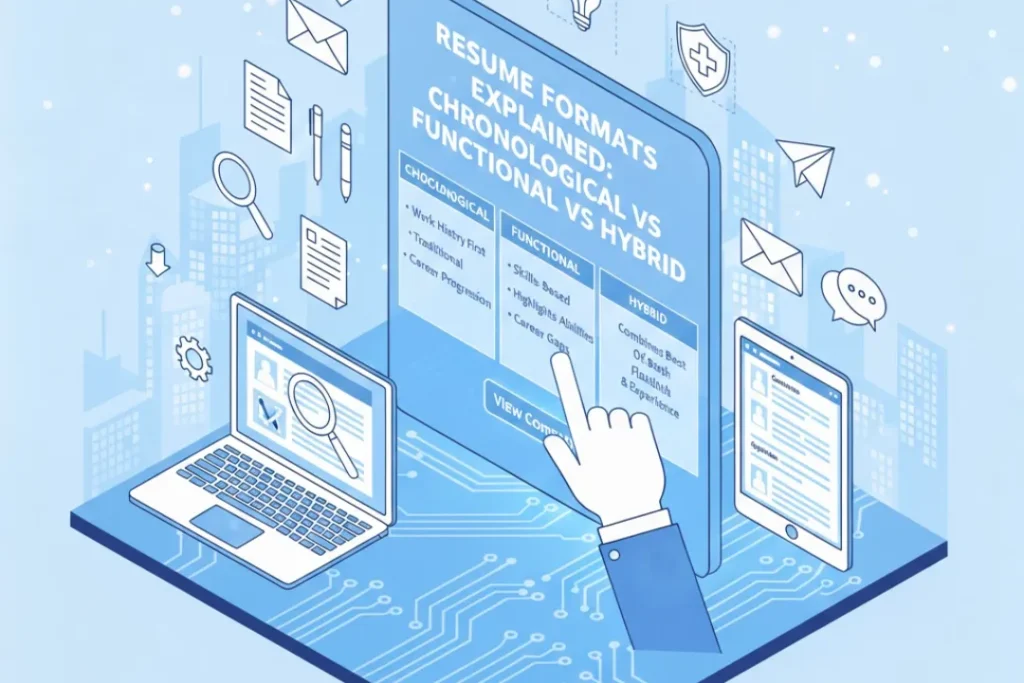
Resume Formats Explained: Chronological vs Functional vs Hybrid

Choosing the right resume format is one of the most critical decisions in your job search journey. The format you select determines how your qualifications are presented to potential employers and can significantly impact whether your resume makes it past applicant tracking systems and into the hands of hiring managers. Understanding the three primary resume formats—chronological, functional, and hybrid—enables you to strategically showcase your strengths while minimizing potential weaknesses in your professional profile. The Chronological Resume Format: The Traditional Standard The chronological resume format is the most widely used and recognized format by employers and recruiters worldwide. This format organizes your work experience in reverse chronological order, with your most recent position listed first and earlier roles following in descending order. Structure and Components: A chronological resume typically begins with your contact information, followed by a professional summary or objective statement. The work experience section takes center stage, positioned prominently after your summary. Each position includes the company name, your job title, employment dates, and bullet points describing your responsibilities and achievements. The education section follows your work history, along with additional sections for skills, certifications, volunteer work, and professional affiliations. The straightforward progression from most recent to oldest employment creates a clear narrative of career development and advancement. Advantages of the Chronological Format: This format excels at demonstrating career progression and stability. Employers can quickly see how you’ve advanced through increasingly responsible positions, which is particularly impressive when you’ve climbed the ladder within the same industry. Hiring managers appreciate the transparency and ease of reviewing your work history timeline. Applicant tracking systems are optimized to parse chronological resumes, making this format the safest choice for ensuring your resume is properly read by automated screening software. The familiarity of this format also means recruiters can quickly locate the information they need without having to decode an unconventional layout. Ideal Candidates for Chronological Format: This format works best for professionals with consistent work history in the same field, those seeking positions similar to their current or recent roles, and individuals who have demonstrated clear career advancement. If you have a solid employment record with recognizable companies and minimal gaps, the chronological format showcases these strengths effectively. Disadvantages to Consider: The chronological format can highlight employment gaps, making them immediately visible to reviewers. Frequent job changes become obvious, potentially raising concerns about commitment or fit. For career changers, this format may emphasize experience in an unrelated field rather than transferable skills relevant to the target position. The Functional Resume Format: Skills-Based Approach The functional resume format shifts focus away from chronological work history and instead emphasizes skills, competencies, and achievements. This format organizes content by skill categories rather than by employment timeline, allowing candidates to showcase their abilities independent of when or where they were developed. Structure and Components: After contact information and a professional summary, a functional resume features prominent skill-based sections with headings like “Project Management,” “Technical Expertise,” or “Customer Relations.” Under each category, you include relevant accomplishments and experiences that demonstrate proficiency in that area. The work history section appears near the bottom of the resume, often condensed to a simple listing of job titles, company names, and employment dates without detailed descriptions. Education and additional sections round out the resume. Advantages of the Functional Format: This format excels at highlighting transferable skills, making it valuable for career changers who want to emphasize relevant capabilities rather than unrelated job titles. It effectively minimizes employment gaps by de-emphasizing the chronological timeline. For individuals with diverse experiences across multiple industries, the functional format creates cohesion by grouping similar skills together. Recent graduates or professionals re-entering the workforce can use this format to emphasize skills developed through education, volunteer work, or other non-traditional experiences. The skills-first approach allows you to align your qualifications directly with job requirements. Ideal Candidates for Functional Format: Career changers transitioning into new industries benefit significantly from this format. Professionals with gaps in employment history, freelancers and consultants with varied project-based work, and individuals with extensive volunteer experience that’s more relevant than paid work find the functional format advantageous. Disadvantages to Consider: Many recruiters and hiring managers view functional resumes with skepticism, suspecting candidates are trying to hide something. Applicant tracking systems often struggle to properly parse functional resumes, potentially causing your application to be rejected automatically. The lack of clear employment timeline can raise red flags about work history consistency. Employers in traditional industries particularly dislike functional resumes because they make it difficult to assess career progression and verify employment. Some companies explicitly request chronological formats, making functional resumes unsuitable for certain applications. The Hybrid Resume Format: Combining Strengths The hybrid resume format, also called the combination format, merges the best elements of chronological and functional formats. This versatile approach allows you to highlight relevant skills while still providing a clear employment history. Structure and Components: A hybrid resume begins with contact information and a compelling professional summary. This is followed by a skills or qualifications summary section that highlights your key competencies, often organized into categories with brief supporting examples. The work experience section follows, presented in reverse chronological order like a traditional resume. However, the descriptions focus on achievements and results that demonstrate the skills mentioned earlier. Education and additional sections complete the resume. Advantages of the Hybrid Format: This format provides maximum flexibility, allowing you to emphasize both skills and work history strategically. You can lead with your strongest qualifications while still satisfying employer expectations for chronological employment verification. The hybrid format works well across industries and experience levels. By showcasing skills upfront, you immediately demonstrate alignment with job requirements while the chronological work history provides context and credibility. This format accommodates diverse career paths better than strictly chronological or functional approaches. Ideal Candidates for Hybrid Format: Professionals with strong skill sets and solid work histories find this format ideal. Career changers with some relevant experience can use it to bridge old and new career paths. Senior-level candidates who want to emphasize leadership

Featured image
Resume

How to Write a Resume: A Complete Step-by-Step Guide (2026)

Writing a compelling resume in 2026 requires more than simply listing your work history and education. With evolving applicant tracking systems, changing employer expectations, and increased competition for quality positions, your resume must be strategically crafted to stand out while remaining professionally polished. This comprehensive guide walks you through every step of creating a resume that opens doors to interview opportunities and advances your career goals. Step 1: Choose the Right Resume Format Before writing a single word, determine which resume format best presents your qualifications. The chronological format works best for candidates with consistent work history in their field, listing experiences from most recent to oldest. The functional format emphasizes skills over timeline, ideal for career changers or those with employment gaps. The hybrid format combines both approaches, showcasing skills while providing chronological work history. For most job seekers in 2026, the hybrid format offers the best results because it satisfies applicant tracking system requirements while allowing strategic emphasis on relevant qualifications. Select your format based on your career stage, employment history consistency, and target industry expectations. Step 2: Gather Your Information Compile all necessary information before beginning to write. Create a master document containing every job you’ve held with exact dates, complete job descriptions, major accomplishments with quantifiable results, educational credentials including degrees and certifications, technical and soft skills, volunteer experiences, professional affiliations, awards and recognition, and relevant projects or publications. Having this comprehensive information readily available ensures accuracy and makes the writing process smoother. You’ll pull relevant details from this master document for each specific job application, tailoring content to match position requirements. Step 3: Create a Professional Header Your resume header contains essential contact information and should be clean, professional, and easy to locate. Include your full name in a larger font size as the document title. Add your phone number with a professional voicemail greeting, a professional email address using your name rather than nicknames or numbers, your city and state (full street address is no longer necessary), and your LinkedIn profile URL. Consider adding a link to your professional portfolio or personal website if relevant to your industry. Ensure all contact information is current and functional. Test email addresses and phone numbers to confirm they work properly before submitting applications. Step 4: Craft a Compelling Professional Summary The professional summary appears immediately below your header and serves as your elevator pitch. This brief paragraph of three to four sentences should capture who you are professionally, what you bring to the table, and what you’re seeking in your next role. For example: “Strategic marketing professional with eight years of experience driving digital transformation initiatives for B2B SaaS companies. Proven track record of increasing qualified leads by 200% through data-driven campaign optimization and marketing automation. Seeking to leverage expertise in demand generation and customer acquisition to scale growth for innovative technology organization.” Avoid generic statements that could apply to anyone. Instead, incorporate specific years of experience, measurable achievements, relevant skills, and your target role. This section should make hiring managers want to continue reading. Step 5: Highlight Your Core Skills Create a skills section that showcases both technical competencies and soft skills relevant to your target position. Carefully review the job description and identify required and preferred qualifications, then mirror that language when listing your skills. Organize skills into logical categories such as Technical Skills, Software Proficiencies, Languages, or Industry Expertise. For technical roles, include programming languages, software platforms, tools, and methodologies. For all positions, balance hard skills with soft skills like leadership, communication, problem-solving, and collaboration. Be honest about proficiency levels. If you’ve only dabbled in a skill, don’t list it as an expertise. Many interviews include technical assessments or detailed questions about listed competencies. Step 6: Detail Your Professional Experience The work experience section forms the core of your resume. List positions in reverse chronological order, starting with your current or most recent role. For each position, include the company name, your job title, employment dates (month and year), and location. Under each role, create bullet points that emphasize achievements rather than just responsibilities. Use the CAR method: Context, Action, Result. Provide context for the situation or challenge, describe the action you took, and quantify the result whenever possible. Strong example: “Identified inefficiencies in inventory management process, implemented automated tracking system, and reduced carrying costs by thirty-two percent while improving order fulfillment speed by forty-eight hours.” Weak example: “Responsible for managing inventory and improving processes.” Begin each bullet point with strong action verbs like spearheaded, optimized, generated, launched, or transformed. Focus on recent positions with detailed descriptions while condensing older roles into brief summaries. Step 7: Showcase Your Education Place your education section after work experience unless you’re a recent graduate or your degree is particularly prestigious and relevant. List degrees in reverse chronological order, including the degree type, major or field of study, institution name, and graduation date. Include your GPA only if you graduated within the past three years and your GPA exceeds 3.5. Add relevant coursework, academic honors, scholarships, or research projects if they strengthen your candidacy for the specific position. Omit high school education if you have a college degree. Step 8: Add Relevant Additional Sections Strengthen your resume with additional sections that demonstrate well-rounded qualifications. Certifications and licenses are particularly valuable in fields like project management, healthcare, IT, and finance. List current, industry-recognized certifications with issuing organizations and dates. Professional development shows commitment to continuous learning. Include relevant workshops, seminars, or training programs. For leadership positions, mention board memberships, speaking engagements, or published articles that establish thought leadership. Volunteer experience can demonstrate values alignment and community engagement while showcasing transferable skills. Include volunteer roles that are substantial or relevant to your target position. Step 9: Optimize for Applicant Tracking Systems In 2026, approximately ninety percent of large companies use applicant tracking systems to screen resumes. Optimize your resume by using standard section headings like “Work Experience” rather than creative alternatives. Incorporate keywords from the job description naturally throughout

Featured image
Resume

Teamwork Skills Examples for Your Resume

In today’s collaborative work environment, teamwork skills have become one of the most sought-after qualities employers look for in candidates. Whether you’re applying for an entry-level position or a senior management role, demonstrating your ability to work effectively with others can set you apart from the competition. This comprehensive guide explores the most valuable teamwork skills to include on your resume and provides concrete examples to help you showcase your collaborative abilities. Why Teamwork Skills Matter Employers consistently rank teamwork among the top soft skills they seek in candidates. According to recent workplace surveys, over 75% of employers value collaboration skills as highly as technical expertise. Modern workplaces rely on cross-functional teams, remote collaboration, and diverse groups working toward common goals. Your ability to navigate these dynamics directly impacts productivity, innovation, and workplace culture. Highlighting teamwork skills on your resume signals to potential employers that you can contribute to a positive work environment, resolve conflicts constructively, and help achieve organizational objectives through collective effort. Essential Teamwork Skills for Your Resume Communication Skills Effective communication forms the foundation of successful teamwork. This includes active listening, clearly articulating ideas, providing constructive feedback, and adapting your communication style to different audiences. On your resume, emphasize experiences where you facilitated meetings, presented to groups, or improved team communication processes. Resume Example: “Facilitated weekly cross-departmental meetings with 15+ stakeholders, improving project alignment and reducing miscommunication by 30%” Collaboration and Cooperation The ability to work harmoniously with colleagues toward shared objectives demonstrates your collaborative mindset. This skill involves being flexible, compromising when necessary, and supporting team members to achieve collective success rather than individual recognition. Resume Example: “Collaborated with design and marketing teams to launch 5 successful product campaigns, generating $2M in revenue” Active Listening Active listening means fully concentrating on what others say, understanding their perspectives, and responding thoughtfully. This skill builds trust and ensures everyone’s voice is heard in team settings. Resume Example: “Implemented active listening techniques during client consultations, increasing customer satisfaction scores by 25%” Conflict Resolution Disagreements are inevitable in team environments. Your ability to mediate disputes, find common ground, and maintain professional relationships during conflicts is invaluable. Resume Example: “Mediated team conflicts and developed resolution protocols that improved department morale and reduced turnover by 15%” Reliability and Accountability Teams depend on members who consistently deliver on commitments and take ownership of their responsibilities. Demonstrating reliability builds credibility and trust within your team. Resume Example: “Maintained 100% on-time project delivery rate across 20+ team initiatives over two years” Flexibility and Adaptability Successful team members adjust to changing circumstances, take on different roles as needed, and remain open to new approaches and ideas. Resume Example: “Adapted to shifting project priorities and assumed additional responsibilities during team transitions, ensuring zero disruption to deliverables” Problem-Solving Teams face challenges that require collective brainstorming and innovative solutions. Your ability to contribute to problem-solving discussions adds significant value. Resume Example: “Led brainstorming sessions that generated 15+ innovative solutions, reducing operational costs by $50,000 annually” Leadership and Initiative Even if you’re not in a formal leadership role, taking initiative and motivating others demonstrates valuable teamwork qualities. Resume Example: “Mentored 8 junior team members, improving their productivity by 40% and accelerating their professional development” Emotional Intelligence Understanding and managing emotions—both your own and others’—helps you navigate interpersonal dynamics and build stronger team relationships. Resume Example: “Utilized emotional intelligence to build rapport with diverse stakeholders, improving cross-cultural team collaboration” Delegation and Trust Knowing when to delegate tasks and trusting team members to execute them effectively demonstrates confidence in your colleagues and optimizes team efficiency. Resume Example: “Effectively delegated tasks among 6-person team based on individual strengths, completing projects 20% faster than estimated” How to Showcase Teamwork Skills on Your Resume Use the STAR Method Structure your accomplishments using Situation, Task, Action, and Result. This approach provides context and demonstrates the impact of your teamwork abilities. Quantify Your Achievements Whenever possible, include numbers, percentages, or specific outcomes that resulted from your collaborative efforts. Metrics make your accomplishments more credible and impressive. Tailor to the Job Description Review the job posting carefully and identify which teamwork skills the employer emphasizes. Prioritize those skills in your resume, using similar language to what appears in the job description. Include Throughout Your Resume Don’t limit teamwork skills to a dedicated skills section. Integrate them throughout your work experience, volunteer activities, and even your professional summary. Provide Specific Examples Avoid generic statements like “excellent team player.” Instead, describe specific situations where you demonstrated teamwork skills and the positive outcomes that resulted. Common Mistakes to Avoid Don’t claim teamwork skills without evidence. Employers want to see proof through concrete examples and achievements. Avoid overusing buzzwords without substance, and ensure every teamwork skill you list is backed by a real accomplishment. Additionally, don’t ignore individual contributions. While emphasizing teamwork is important, employers also want to understand your unique role in team successes. Final Tips for Success Remember that teamwork skills develop over time through practice and experience. If you’re early in your career, draw examples from academic projects, volunteer work, sports teams, or extracurricular activities. These experiences are just as valid for demonstrating collaborative abilities. Keep your resume updated as you gain new teamwork experiences. Regular updates ensure you don’t forget important accomplishments and help you track your professional growth. Consider maintaining a career journal where you document team successes and your specific contributions. Finally, be prepared to discuss your teamwork skills during interviews. Your resume examples should serve as conversation starters that allow you to elaborate on your collaborative approach and problem-solving abilities in team settings. Conclusion Teamwork skills are essential in virtually every industry and role. By strategically highlighting your collaborative abilities with specific examples and measurable results, you demonstrate to potential employers that you’re not just a qualified candidate but a valuable team member who can contribute to organizational success. Take time to reflect on your past experiences, identify instances where you demonstrated strong teamwork skills, and craft compelling resume statements that showcase your ability

Featured image
Resume

AI Resume Writing Tools Compared

The job market has transformed dramatically with artificial intelligence reshaping how professionals approach career advancement. AI resume writing tools have emerged as powerful allies for job seekers, offering sophisticated algorithms that can craft compelling resumes in minutes. With dozens of options available, choosing the right AI resume writer can significantly impact your job search success. Understanding AI Resume Writing Technology AI resume writing tools leverage natural language processing and machine learning to analyze job descriptions, industry trends, and successful resume patterns. These platforms go beyond simple templates, using advanced algorithms to match your experience with employer expectations. The technology scans millions of job postings and successful applications to identify keywords, phrases, and formatting that resonate with applicant tracking systems and human recruiters alike. Modern AI resume builders learn from vast databases of professional profiles, understanding which accomplishments and skills combinations yield the best results across different industries. This intelligence allows them to suggest improvements that might not be obvious to traditional resume writers or even experienced career coaches. Top AI Resume Writing Tools in 2026 Several platforms have distinguished themselves in the competitive AI resume writing landscape. Each offers unique features tailored to different user needs and career stages. Rezi stands out for its ATS optimization focus. The platform specifically targets applicant tracking systems, ensuring resumes pass through automated screening processes. Rezi provides real-time content analysis, scoring your resume based on keyword density, formatting, and overall effectiveness. The tool offers both free and premium tiers, with the paid version unlocking unlimited resume versions and advanced AI suggestions. Users appreciate its straightforward interface and detailed feedback on how to improve their documents. Resume Worded combines AI technology with insights from actual recruiters and hiring managers. This platform analyzes your resume against successful examples from your target industry, providing specific recommendations for improvement. Its standout feature is the job description scanner that identifies missing keywords and suggests exact phrases to include. The tool also offers LinkedIn profile optimization, making it valuable for comprehensive personal branding efforts. Kickresume appeals to users seeking design flexibility alongside AI assistance. The platform provides over 50 professionally designed templates while using AI to generate compelling content. Its GPT-4 powered resume writer can create entire resume sections from brief prompts, though users should review and personalize the output. Kickresume includes a cover letter builder and personal website creator, offering an all-in-one solution for job seekers. Teal takes a holistic approach to job searching by integrating resume building with job tracking and career development features. The AI resume builder connects directly to your work history, pulling information to create tailored resumes for specific positions. Teal’s strength lies in its job application tracker, which helps users manage multiple applications while customizing resumes for each opportunity. The platform offers excellent collaboration features for those seeking feedback from mentors or career advisors. Enhancv focuses on storytelling and personal branding, using AI to help professionals showcase their unique value proposition. The platform encourages users to highlight achievements and impact rather than simply listing duties. Its AI content generator suggests powerful action verbs and quantifiable results, transforming basic job descriptions into compelling narratives. Enhancv particularly excels for creative professionals and those in competitive fields where differentiation matters. Comparing Features and Functionality When evaluating AI resume writing tools, several key features deserve consideration. ATS compatibility remains crucial, as approximately 75% of resumes never reach human eyes due to automated filtering. The best tools provide clear feedback on ATS optimization, ensuring your resume includes relevant keywords without awkward stuffing. Content quality varies significantly across platforms. While all AI tools can generate text, the sophistication of suggestions differs. Premium tools offer context-aware recommendations that understand industry nuances and career progression patterns. They recognize when to emphasize leadership experience versus technical skills based on your target role. Customization capabilities determine how well you can tailor resumes for different opportunities. Top platforms allow easy duplication and modification of base resumes, enabling efficient application to multiple positions. Look for tools that remember your work history and can quickly regenerate content for new job descriptions. User experience impacts efficiency and stress levels during job searches. Intuitive interfaces with clear guidance help users complete professional resumes quickly. The best platforms balance automation with control, offering AI suggestions while allowing manual adjustments to maintain authenticity. Pricing and Value Considerations AI resume writing tools typically offer freemium models or subscription-based pricing. Free versions generally provide basic templates and limited AI features, suitable for entry-level positions or those with straightforward career paths. However, serious job seekers benefit from premium subscriptions ranging from $10 to $30 monthly. Consider the cost against potential returns. A well-optimized resume can reduce job search time by weeks or months, potentially impacting salary negotiations and career trajectory. Premium features like unlimited resume versions, advanced AI analysis, and cover letter generation often justify the investment for active job seekers. Making Your Choice Selecting the right AI resume writing tool depends on your specific circumstances. Recent graduates might prioritize affordability and templates that compensate for limited experience. Career changers benefit from platforms that excel at translating transferable skills. Senior professionals need tools that effectively showcase leadership and strategic impact. Test multiple platforms using free trials before committing to subscriptions. Pay attention to how natural the AI-generated content sounds and whether suggestions align with your industry’s expectations. The best tool combines powerful AI capabilities with your unique insights and experiences. AI resume writing tools have democratized access to professional-quality career documents, but they work best as collaborative partners rather than complete replacements for human judgment. Use these platforms to enhance your resume while ensuring the final product authentically represents your professional story and career aspirations.

Featured image
Resume

CV Templates for Middle East Jobs

Landing a job in the Middle East requires more than just qualifications and experience. Your curriculum vitae serves as your first impression, and in competitive markets like the UAE, Saudi Arabia, Qatar, and Oman, having a professionally formatted CV can make the difference between securing an interview and being overlooked. Understanding Middle East CV Expectations The Middle East job market has unique expectations when it comes to CV presentation. Unlike Western countries where brevity is valued, employers in Gulf Cooperation Council (GCC) countries often expect comprehensive CVs that provide detailed information about your background, qualifications, and personal details. Most Middle Eastern employers prefer CVs that are between two to three pages long, allowing candidates to thoroughly showcase their experience and credentials. This differs significantly from the one-page resume standard in countries like the United States, making it essential to choose the right template that accommodates this preference. Essential Components of Middle East CVs When selecting or creating a CV template for Middle East positions, ensure it includes specific sections that local employers expect. Your CV should prominently feature personal information including your full name, nationality, date of birth, marital status, and current location. While some of these details might be omitted in Western CVs due to discrimination laws, they are standard requirements in Middle Eastern job applications. A professional photograph is almost mandatory for Middle East CVs. Choose a template with a dedicated space for a high-quality headshot. This should be a formal, business-appropriate photo with professional attire and a neutral background. The photograph placement is typically in the top right or left corner of the first page. Your contact information should be comprehensive, including your email address, phone number with country code, and LinkedIn profile URL. Given the international nature of Middle East job markets, ensuring your contact details facilitate easy communication across time zones is crucial. Formatting Styles That Work Middle East employers generally prefer clean, professional CV templates with clear section divisions. Chronological formats work best, as they allow recruiters to quickly understand your career progression. Reverse chronological order is the standard, starting with your most recent position and working backward. Conservative color schemes are recommended. While creative industries might accept some color variation, most positions in the Middle East favor black text on white backgrounds with minimal accent colors. Navy blue, dark gray, or burgundy can be used sparingly for section headers or lines to add visual interest without appearing unprofessional. Font selection matters significantly. Stick with professional, easily readable fonts such as Arial, Calibri, Times New Roman, or Garamond. Font sizes should range between 10 and 12 points for body text, with slightly larger sizes for your name and section headings. Consistency in font usage throughout the document demonstrates attention to detail. Tailoring Templates by Country Different Middle Eastern countries have subtle preferences worth considering. In the UAE, particularly in Dubai and Abu Dhabi, international standards blend with local expectations. CV templates with modern, sleek designs work well, especially for positions in finance, technology, and hospitality sectors. Saudi Arabia’s job market traditionally favors more conservative CV presentations. Templates with straightforward layouts and minimal design elements are appreciated. Include Arabic translations of your name and job titles if applying to government entities or traditional Saudi companies. Qatar’s rapidly developing job market, especially sectors related to infrastructure and education, values CVs that highlight international qualifications and experience. Templates that emphasize educational credentials and certifications work particularly well for Qatari applications. Digital Template Resources Numerous platforms offer CV templates specifically designed for Middle East job applications. Microsoft Word and Google Docs provide free templates that can be customized to meet regional requirements. Professional networking sites like LinkedIn allow you to download your profile as a formatted CV, which can serve as a starting point. Specialized job portals such as Bayt.com and GulfTalent.com offer region-specific CV builders that automatically format your information according to Middle East standards. These platforms understand local employer expectations and structure templates accordingly. For those seeking premium options, websites like Canva, Resume.io, and Novoresume provide professionally designed templates with Middle East-friendly layouts. While some require subscriptions, they offer sophisticated designs that stand out while maintaining professionalism. Common Mistakes to Avoid Avoid overly creative or unconventional CV templates unless applying for creative positions. Middle East employers, particularly in traditional sectors like oil and gas, banking, and government, prefer conventional presentations. Infographic-style CVs or those with excessive graphics often get rejected by applicant tracking systems. Don’t use templates that lack space for detailed work descriptions. Middle East employers want to understand exactly what you accomplished in each role. Choose templates with adequate white space and section divisions that allow for comprehensive bullet points under each position. Neglecting to include visa status is another common oversight. Your CV template should have a clear section mentioning your current visa status, notice period, and availability to join. This information is crucial for Middle East recruiters who need to understand hiring logistics immediately. Optimizing for Applicant Tracking Systems Many Middle East companies, especially larger corporations and multinational organizations, use applicant tracking systems (ATS) to screen CVs. Choose templates that are ATS-friendly, meaning they avoid complex formatting, tables, text boxes, or graphics that software cannot read properly. Stick with standard section headings that ATS software recognizes such as “Work Experience,” “Education,” “Skills,” and “Certifications.” Creative heading names might confuse the system and result in your CV being filtered out before human eyes ever see it. Save your CV in both PDF and Word formats. While PDF preserves formatting, some Middle East companies specifically request Word documents. Having both versions ready ensures you can submit in the preferred format immediately. Final Recommendations Selecting the right CV template for Middle East jobs requires balancing professional presentation with regional expectations. Prioritize clarity, comprehensiveness, and cultural appropriateness over creative design. Your template should showcase your qualifications effectively while respecting the formal business culture prevalent across Gulf countries. Regularly update your CV template to reflect current trends while maintaining core elements that Middle East employers expect.

Featured image
Resume

Best Resume Builders for 2026 (Ranked)

Creating a standout resume has never been more critical in today’s competitive job market. With artificial intelligence transforming recruitment processes and applicant tracking systems becoming increasingly sophisticated, job seekers need professional tools to craft resumes that pass digital screenings and impress human recruiters alike. Resume builders have evolved significantly, offering AI-powered suggestions, industry-specific templates, and seamless integration with job boards. This comprehensive guide ranks the best resume builders for 2026, helping you choose the perfect platform to accelerate your job search. Why Use a Resume Builder in 2026? The traditional approach of formatting resumes in word processors is becoming obsolete. Modern resume builders offer distinct advantages that can significantly impact your job search success. These platforms provide ATS-friendly templates ensuring your resume passes automated screening systems that filter up to 75% of applications before human review. They incorporate AI-powered content suggestions that help articulate achievements effectively, offer real-time optimization feedback, and provide instant formatting that maintains professional standards across devices. Professional resume builders save valuable time during job searches, allowing you to focus on networking and interview preparation rather than struggling with formatting issues. With built-in keyword optimization, these tools help match your qualifications to job descriptions, increasing visibility to recruiters searching candidate databases. Best Resume Builders for 2026: Detailed Rankings 1. Zety Resume Builder Zety consistently ranks as the industry leader for its intuitive interface and powerful AI capabilities. The platform offers over 20 professionally designed templates that adapt seamlessly to various industries, from creative fields to corporate environments. Its AI writing assistant analyzes job descriptions and suggests relevant skills, accomplishments, and action verbs tailored to your target role. The real-time content analyzer evaluates your resume against industry standards, providing instant feedback on length, keyword density, and impact. Zety’s unique strength lies in its comprehensive career resource library, offering interview preparation guides and salary negotiation tools alongside resume building. Pricing starts at $2.70 for a 14-day trial, with monthly subscriptions available for ongoing job searches. 2. Resume.io Resume.io distinguishes itself through exceptional design quality and user experience. The platform features elegant, modern templates that balance visual appeal with ATS compatibility. Its step-by-step builder guides users through each resume section with helpful prompts and examples, making it ideal for first-time resume creators and career changers. The platform includes a robust cover letter builder with matching designs, ensuring cohesive application materials. Resume.io’s pre-written content suggestions are particularly strong for technical roles, offering industry-specific terminology and achievement frameworks. Users appreciate the unlimited resume creation feature, allowing experimentation with different formats for various applications. Monthly plans start at $2.95 during promotional periods. 3. Novoresume Novoresume excels in versatility, offering traditional and creative resume formats suitable for diverse career paths. The platform’s strength lies in its customization options, allowing fine-tuned control over spacing, colors, and section arrangements while maintaining ATS compatibility. Its content analyzer evaluates resume effectiveness using proprietary algorithms based on recruiter preferences. The platform includes specialized templates for different experience levels, from entry-level candidates to executive professionals. Novoresume’s integration with LinkedIn streamlines the import process, automatically populating resume fields from your profile. The free version provides substantial functionality, while premium features including unlimited downloads and custom branding are available for $16 monthly. 4. Canva Resume Builder Canva revolutionizes resume design for creative professionals, offering thousands of customizable templates with stunning visual elements. While traditionally known for graphic design, Canva’s resume builder now includes ATS-optimized formats alongside creative options. This dual approach makes it perfect for designers, marketers, and artists who need portfolios alongside traditional resumes. The drag-and-drop interface provides unprecedented design freedom, allowing incorporation of infographics, custom icons, and brand colors. Collaboration features enable career counselors or mentors to provide real-time feedback. Canva’s extensive free library makes professional design accessible, with Canva Pro subscriptions at $12.99 monthly unlocking premium elements and backgrounds. 5. TopResume TopResume differentiates itself by combining technology with human expertise. Beyond automated building tools, the platform offers professional resume writing services with certified writers specializing in various industries. The free resume review service provides personalized feedback from actual recruiters, identifying specific improvements beyond standard AI suggestions. The platform’s proprietary ATS compatibility checker tests resumes against actual applicant tracking systems, ensuring optimal formatting. TopResume’s job search dashboard aggregates openings matching your profile, streamlining applications. While basic building tools are free, professional writing services range from $149 to $349 depending on career level and package selected. Choosing the Right Resume Builder Selecting the ideal resume builder depends on individual circumstances and career goals. Consider your industry standards when evaluating options, as creative fields may benefit from visually distinctive formats while conservative industries prefer traditional designs. Budget constraints matter, with free versions offering basic functionality and premium subscriptions providing advanced features worth considering for serious job searches. Technical skill level influences platform choice, with some builders requiring minimal design knowledge while others reward creativity and customization. Job search intensity also factors into decision-making, as unlimited downloads and ongoing support justify subscription costs during active searches but may not be necessary for occasional updates. Conclusion The best resume builders for 2026 combine artificial intelligence, professional design, and user-friendly interfaces to create compelling application materials. Whether you choose Zety’s comprehensive features, Resume.io’s elegant simplicity, Novoresume’s versatility, Canva’s creative freedom, or TopResume’s expert guidance, investing in a quality resume builder significantly enhances job search outcomes. These platforms transform the often-frustrating resume creation process into an efficient, confidence-building experience that positions you competitively in today’s dynamic employment landscape.

Featured image
Resume

Free Resume Templates (PDF, Word, Google Docs)

Finding the perfect resume template can be the difference between landing an interview and getting lost in a sea of applications. With countless free resume templates available in PDF, Word, and Google Docs formats, job seekers have more options than ever to create professional, eye-catching resumes that stand out to hiring managers. Why Use Free Resume Templates? Resume templates provide a solid foundation for showcasing your skills, experience, and qualifications in a professionally formatted document. Rather than starting from scratch, templates offer pre-designed layouts that ensure your resume looks polished and organized. This saves valuable time during your job search while ensuring your application materials meet modern hiring standards. Free resume templates eliminate the need for expensive design software or professional resume writing services. Whether you’re a recent graduate entering the workforce, a seasoned professional seeking career advancement, or someone transitioning between industries, accessible templates help you create compelling resumes without financial barriers. PDF Resume Templates: Universal Compatibility PDF resume templates offer unmatched compatibility across different devices and operating systems. When you download a PDF template, you can be confident that your carefully crafted formatting will remain intact regardless of who opens it or what device they use. This consistency makes PDF formats ideal for submitting applications through online portals and email. Many PDF templates come with fillable fields, allowing you to input your information directly into the document. This feature is particularly useful for job seekers who want a quick, straightforward way to create professional resumes without extensive editing capabilities. Once completed, PDF resumes maintain their professional appearance and cannot be accidentally altered by recipients. Word Resume Templates: Maximum Flexibility Microsoft Word remains one of the most popular formats for resume creation, and for good reason. Word templates offer extensive customization options, allowing you to adjust fonts, colors, spacing, and layout elements to match your personal brand. This flexibility makes Word templates perfect for job seekers who want complete control over their resume’s appearance. The widespread availability of Microsoft Word means most people can easily edit these templates on their computers. Modern Word resume templates include various styles, from traditional chronological formats to contemporary designs with creative elements. Many templates feature built-in sections for summary statements, work experience, education, skills, and additional categories like certifications or volunteer work. Word templates also support advanced features like tables, text boxes, and columns, enabling complex layouts that highlight your qualifications effectively. You can save your completed resume as a Word document for easy updates or export it as a PDF for submission. Google Docs Resume Templates: Cloud-Based Convenience Google Docs templates have gained popularity due to their accessibility and collaborative features. These cloud-based templates can be accessed from any device with internet connection, making them ideal for job seekers who work across multiple computers or prefer mobile editing capabilities. Google Docs offers a template gallery with numerous free resume options, all professionally designed and ready to customize. The auto-save feature ensures you never lose your work, while the sharing capabilities allow mentors, career counselors, or friends to provide feedback directly on your document. The platform’s simplicity makes Google Docs templates particularly attractive to users who want straightforward editing without complex software. You can easily download your completed resume as a PDF or Word document for submission, maintaining formatting integrity across different file types. Choosing the Right Template for Your Industry Different industries have varying expectations for resume presentation. Creative fields like graphic design, marketing, or advertising often appreciate visually distinctive templates with color and design elements. Meanwhile, conservative industries such as finance, law, or healthcare typically prefer traditional, minimalist templates with clean layouts and standard fonts. Consider your target industry when selecting a template. Research companies you’re interested in and examine their branding to understand their corporate culture. This insight helps you choose templates that align with organizational expectations while showcasing your professionalism. Essential Elements Every Resume Template Should Include Regardless of format, quality resume templates should include designated sections for contact information, professional summary or objective, work experience, education, and skills. Optional sections might include certifications, awards, publications, volunteer experience, or languages. Look for templates with clear hierarchy and adequate white space. Recruiters spend mere seconds scanning each resume, so information should be easily digestible. Headers should stand out, bullet points should be concise, and your most relevant qualifications should appear prominently. Customizing Your Template Effectively While templates provide excellent starting points, customization is crucial for standing out. Personalize your chosen template by adjusting colors to match your professional brand, selecting fonts that reflect your industry standards, and reorganizing sections to emphasize your strongest qualifications. Tailor your resume content for each application by highlighting relevant experience and skills that match job requirements. Even with a template foundation, your unique career story should shine through, demonstrating why you’re the ideal candidate for specific positions. Where to Find Quality Free Resume Templates Numerous reputable websites offer free, professionally designed resume templates. Microsoft Office provides templates directly through Word, while Google Docs includes options in its template gallery. Job search platforms, career websites, and design resources also offer downloadable templates in various formats. When selecting sources, prioritize websites with modern, ATS-friendly templates. Applicant Tracking Systems scan resumes before human review, so templates should use standard formatting that these systems can easily parse. Conclusion Free resume templates in PDF, Word, and Google Docs formats democratize access to professional resume design, empowering job seekers at all levels to create compelling applications. By selecting appropriate templates, customizing them thoughtfully, and tailoring content to specific opportunities, you can develop powerful resumes that open doors to your desired career path. Start exploring available templates today and take the first step toward landing your next opportunity.

Featured image
Resume

Leadership Skills to Add to Your Resume

In today’s competitive job market, leadership skills have become essential qualifications that employers actively seek, regardless of the position level. Whether you’re applying for a management role or an entry-level position, demonstrating leadership capabilities on your resume can significantly enhance your candidacy and set you apart from other applicants. Why Leadership Skills Matter on Your Resume Leadership skills transcend traditional management positions. Employers value candidates who can take initiative, inspire colleagues, and drive results even without formal authority. These competencies signal your potential for growth, your ability to contribute to team success, and your readiness to handle increased responsibilities. Including relevant leadership skills on your resume demonstrates that you’re not just a task executor but a potential catalyst for organizational improvement. Strategic Planning and Vision Strategic planning represents one of the most valued leadership competencies. This skill involves setting long-term goals, identifying resources needed to achieve them, and creating actionable roadmaps for success. When adding strategic planning to your resume, include specific examples such as developing departmental initiatives, creating project timelines, or implementing new processes that aligned with organizational objectives. Quantify your achievements whenever possible, such as mentioning how your strategic approach increased efficiency by a certain percentage or contributed to revenue growth. Team Building and Collaboration Effective leaders excel at assembling high-performing teams and fostering collaborative environments. Team building skills encompass recruiting talent, delegating responsibilities appropriately, and creating cohesive groups that work toward common goals. On your resume, highlight instances where you’ve formed cross-functional teams, mentored junior colleagues, or facilitated collaboration between departments. Emphasize outcomes like improved team productivity, reduced turnover rates, or successful project completions that resulted from your team-building efforts. Communication and Active Listening Communication stands as the cornerstone of effective leadership. This multifaceted skill includes verbal and written communication, presentation abilities, and perhaps most importantly, active listening. Strong leaders articulate vision clearly, provide constructive feedback, and ensure information flows effectively throughout the organization. When showcasing communication skills on your resume, reference specific accomplishments such as delivering presentations to stakeholders, leading client negotiations, or creating communication protocols that enhanced organizational transparency. Decision-Making and Problem-Solving Leaders regularly face situations requiring quick, informed decisions. Decision-making skills demonstrate your ability to analyze information, weigh alternatives, consider risks, and choose optimal courses of action under pressure. Problem-solving complements this by showing how you identify challenges and develop creative solutions. Include examples on your resume that illustrate your analytical approach, such as resolving conflicts, troubleshooting operational issues, or making data-driven decisions that positively impacted business outcomes. Delegation and Empowerment Knowing when and how to delegate tasks represents crucial leadership wisdom. Effective delegation involves understanding team members’ strengths, assigning appropriate responsibilities, and trusting others to deliver results. This skill demonstrates confidence, organizational awareness, and the ability to maximize team potential. On your resume, mention instances where you successfully distributed workload, empowered team members to take ownership of projects, or developed others’ skills through strategic task assignment. Emotional Intelligence and Empathy Modern leadership increasingly emphasizes emotional intelligence—the ability to recognize, understand, and manage your own emotions while empathizing with others. Leaders with high emotional intelligence build stronger relationships, navigate conflicts more effectively, and create positive work environments. Demonstrate this skill by highlighting experiences where you mediated disputes, supported team members through challenges, or adapted your leadership approach to meet diverse team needs. Adaptability and Change Management In rapidly evolving business environments, adaptability has become indispensable. Leaders must navigate uncertainty, guide teams through transitions, and remain effective amid constant change. Change management skills show your ability to implement new systems, restructure processes, and help others embrace transformation. Include examples of leading organizational changes, adopting new technologies, or pivoting strategies in response to market shifts. Accountability and Integrity Taking responsibility for outcomes—both successes and failures—defines authentic leadership. Accountability means owning your decisions, meeting commitments, and holding yourself to high standards. Integrity involves leading by example and maintaining ethical standards. These qualities may be demonstrated through consistent track records, completion rates, or instances where you took responsibility for team outcomes and implemented improvements based on lessons learned. Motivation and Inspiration Great leaders inspire others to achieve their best work. Motivational skills involve recognizing achievements, providing encouragement, and creating environments where people feel valued and driven to excel. On your resume, showcase how you’ve boosted team morale, increased engagement scores, or created recognition programs that enhanced performance and job satisfaction. Conflict Resolution Disagreements inevitably arise in any workplace, and leaders must address them constructively. Conflict resolution skills demonstrate your ability to mediate disputes, find common ground, and maintain productive relationships despite differences. Include examples of successfully resolving team conflicts, negotiating compromises, or facilitating difficult conversations that led to positive outcomes. How to Present Leadership Skills Effectively When adding leadership skills to your resume, integrate them throughout rather than simply listing them. Include them in your professional summary, weave them into job descriptions with specific achievements, and support them with quantifiable results. Use action verbs like “led,” “managed,” “coordinated,” “mentored,” and “developed” to convey leadership actively. Tailor your leadership skills to match job requirements, emphasizing those most relevant to your target position. Back each skill with concrete examples demonstrating impact, and whenever possible, include metrics that prove your effectiveness. Mentorship and Coaching The ability to mentor and coach others represents a sophisticated leadership skill that employers highly value. Mentorship involves guiding less experienced colleagues, sharing knowledge, and helping others develop their careers. Coaching focuses on unlocking individual potential through supportive questioning and feedback. Demonstrate these skills by mentioning formal mentorship programs you’ve participated in, the number of team members you’ve developed, or career advancement achieved by those you’ve mentored. Conclusion Leadership skills have become fundamental qualifications across all career levels and industries. By strategically incorporating these competencies into your resume with supporting evidence and measurable results, you position yourself as a valuable candidate ready to contribute meaningfully to organizational success and growth. Remember that effective leadership continues evolving, so regularly update your skills and showcase your commitment to continuous improvement as a leader.

Featured image
Resume

Resume Keywords for ATS Optimization

In today’s competitive job market, your resume must first impress a machine before it reaches human eyes. Applicant Tracking Systems, commonly known as ATS, scan and filter resumes based on specific keywords and criteria. Understanding how to optimize your resume with the right keywords can mean the difference between landing an interview and disappearing into a digital black hole. This comprehensive guide will help you master ATS optimization and significantly improve your chances of getting noticed. Understanding Applicant Tracking Systems Applicant Tracking Systems are software applications that help employers manage the recruitment process. Over 98% of Fortune 500 companies use ATS software, and the technology has become increasingly common among smaller businesses as well. These systems scan resumes for relevant keywords, qualifications, and formatting before ranking candidates. Resumes that don’t contain the right keywords or follow ATS-friendly formatting often get rejected automatically, regardless of the candidate’s actual qualifications. The ATS doesn’t just look for random keywords. It searches for specific terms related to skills, job titles, certifications, tools, technologies, and experience levels mentioned in the job description. The system assigns scores based on how well your resume matches these criteria, and only the highest-scoring resumes typically make it to human recruiters. Types of Keywords That Matter Hard Skills Keywords Hard skills represent technical abilities and specific knowledge areas. These are often the most important keywords for ATS optimization because they’re concrete and measurable. Examples include programming languages like Python or Java, software applications such as Salesforce or Adobe Creative Suite, methodologies like Agile or Six Sigma, and technical processes such as financial analysis or data modeling. Always include the specific tools, technologies, and technical skills mentioned in the job posting. Soft Skills Keywords While soft skills are harder to measure, many ATS platforms scan for them as well. Common soft skill keywords include leadership, communication, problem-solving, teamwork, time management, adaptability, and critical thinking. However, soft skills carry less weight in ATS algorithms compared to hard skills and should complement rather than replace technical qualifications. Industry-Specific Keywords Every industry has its own terminology and jargon. Healthcare resumes might include terms like HIPAA compliance, patient care, or electronic health records. Marketing resumes could feature SEO, content strategy, or campaign management. Research the common terminology in your field and incorporate relevant terms naturally throughout your resume. Job Titles and Role Keywords Include variations of job titles that match your experience level and the position you’re seeking. If you’re applying for a project manager role, your resume might also mention program coordinator, team lead, or project coordinator if these accurately describe your background. Many ATS systems search for both exact matches and related titles. Certifications and Credentials Professional certifications are powerful ATS keywords. Include the full name of certifications along with common abbreviations. For example, write “Project Management Professional (PMP)” rather than just “PMP.” This ensures the ATS catches both the acronym and the complete title. How to Identify the Right Keywords Analyze the Job Description The job posting is your primary keyword source. Read through it carefully and identify repeated terms, required qualifications, and preferred skills. Pay special attention to the “requirements” or “qualifications” sections, as these typically contain the most important keywords. Create a list of hard skills, soft skills, tools, and qualifications mentioned, then strategically incorporate these into your resume. Research Industry Standards Look at multiple job postings for similar positions to identify common patterns. What skills appear repeatedly? Which tools or technologies are industry standards? This research helps you understand which keywords are universally important in your field versus those specific to individual companies. Use Online Tools Several online platforms can help identify optimal keywords. Jobscan, Resume Worded, and similar tools allow you to compare your resume against job descriptions and receive keyword optimization suggestions. LinkedIn job posts often highlight key skills and can provide insight into trending industry keywords. Strategic Keyword Placement Professional Summary Your professional summary or objective statement should include three to five of your most important keywords. This section appears at the top of your resume and receives significant attention from ATS algorithms. Use this space to immediately demonstrate your relevance to the position. Skills Section Create a dedicated skills section that lists relevant keywords in a clear, scannable format. Organize skills by category if you have many to include, such as “Technical Skills,” “Software Proficiency,” or “Languages.” This section serves as a keyword-rich area that ATS platforms can easily parse. Work Experience Incorporate keywords naturally within your job descriptions and achievement statements. Rather than simply listing keywords, demonstrate how you applied these skills. For example, instead of writing “project management” in isolation, write “Led project management initiatives that delivered five major software implementations under budget.” Education and Certifications List educational credentials and certifications with complete names and any relevant keywords. Include degree types, majors, institutions, and graduation dates. For certifications, include both the full name and common abbreviations. ATS-Friendly Formatting Guidelines Keywords alone won’t guarantee ATS success if your formatting causes parsing errors. Use standard section headings like “Work Experience,” “Education,” and “Skills” rather than creative alternatives. Stick to common fonts such as Arial, Calibri, or Times New Roman. Avoid headers, footers, tables, text boxes, and graphics, as these can confuse ATS software. Save your resume as a Word document or PDF, depending on the application instructions, as these formats are most compatible with ATS platforms. Common Keyword Mistakes to Avoid Keyword Stuffing While including keywords is essential, cramming them unnaturally into your resume backfires. ATS algorithms have become sophisticated enough to detect keyword stuffing, and human reviewers will immediately notice awkward phrasing. Focus on natural integration within meaningful context. Using Only Acronyms Always spell out acronyms on first use, followed by the abbreviation in parentheses. This ensures the ATS catches both versions. For example, write “Search Engine Optimization (SEO)” rather than just “SEO.” Ignoring Synonyms Different companies use different terms for similar skills. Include relevant synonyms and variations. For instance, if you have customer service experience, also mention client relations, customer support, or

Featured image
Resume

Free Resume Keyword Tools You Must Use

In today’s digital hiring landscape, your resume must pass through Applicant Tracking Systems (ATS) before reaching human recruiters. These automated systems scan resumes for specific keywords, and without the right ones, even the most qualified candidates get filtered out. Fortunately, numerous free resume keyword tools can help you optimize your application and significantly increase your chances of landing interviews. Understanding Resume Keywords and ATS Systems Before diving into the tools, it’s essential to understand how keywords function in modern recruitment. Applicant Tracking Systems parse resumes to identify relevant skills, experiences, and qualifications that match job descriptions. These systems rank candidates based on keyword matches, formatting compatibility, and relevance scores. Keywords typically include technical skills, soft skills, industry-specific terminology, certifications, and job-related action verbs. A well-optimized resume strategically incorporates these keywords naturally throughout various sections without appearing forced or repetitive. The right tools help you identify which keywords matter most for your target positions. Jobscan: The Industry-Leading ATS Optimizer Jobscan stands out as one of the most comprehensive free resume keyword tools available. This platform allows you to upload your resume and paste a job description, then analyzes the match rate between them. The free version provides detailed feedback on missing keywords, formatting issues, and specific recommendations for improvement. The tool highlights hard skills, soft skills, and other important keywords you should consider adding. It also identifies overused words and suggests better alternatives. Jobscan’s strength lies in its database of real ATS algorithms, ensuring your resume optimization aligns with actual system requirements rather than generic advice. Users particularly appreciate Jobscan’s color-coded match rate system, which shows exactly where improvements are needed. While the free version limits the number of scans per month, it’s sufficient for targeted job applications and provides actionable insights that dramatically improve resume performance. Resume Worded: AI-Powered Resume Analysis Resume Worded leverages artificial intelligence to provide instant feedback on your resume. This free tool offers a comprehensive score based on various criteria including keyword optimization, impact, brevity, and style. The platform analyzes your resume against successful resumes from top companies and identifies areas for enhancement. One standout feature is the line-by-line feedback that suggests specific improvements for each bullet point. Resume Worded identifies weak action verbs, vague descriptions, and missing metrics that could strengthen your application. The tool also offers a LinkedIn optimization feature, ensuring consistency across your professional profiles. The free version includes limited monthly reviews but provides detailed reports covering recruiter preferences, ATS compatibility, and content quality. Resume Worded’s targeted suggestions help you transform generic descriptions into compelling achievement statements enriched with relevant keywords. Skillsyncer: Precision Keyword Matching Skillsyncer focuses specifically on matching your resume keywords to job requirements. This straightforward tool analyzes how well your resume aligns with specific job postings, highlighting matched keywords, missing keywords, and keyword density issues. The platform provides a percentage-based match score and categorizes keywords into required, preferred, and optional. This classification helps prioritize which keywords deserve prime placement in your resume. Skillsyncer also warns against keyword stuffing, ensuring your resume remains readable and authentic. What makes Skillsyncer valuable is its simplicity and focus. Rather than overwhelming users with multiple features, it excels at one thing: ensuring your resume contains the right keywords in appropriate quantities. The free version allows several comparisons monthly, making it ideal for job seekers applying to select positions. VMock: Comprehensive Resume Assessment VMock offers a sophisticated resume analysis platform that evaluates your resume across multiple dimensions. This tool provides a detailed scorecard assessing presentation, language effectiveness, and keyword optimization. The platform compares your resume against industry benchmarks and successful resumes from similar roles. The keyword analysis component identifies industry-specific terminology, technical skills, and competencies that align with your target field. VMock’s free version includes limited assessments but delivers comprehensive feedback covering formatting, content structure, and keyword integration. Users appreciate VMock’s actionable recommendations and the ability to track improvements over time. The platform’s smart parser technology accurately extracts information from various resume formats, ensuring reliable analysis regardless of your document structure. Targeted Resume: Job-Specific Optimization Targeted Resume simplifies the keyword optimization process by allowing you to compare your resume directly against job descriptions. The tool identifies missing keywords and provides suggestions for incorporating them naturally into your existing content. This platform emphasizes contextual keyword placement, ensuring keywords appear in relevant sections rather than being randomly scattered throughout your resume. Targeted Resume also analyzes keyword frequency, helping you avoid both under-optimization and over-stuffing. The free version offers basic keyword analysis that’s particularly useful for job seekers in competitive fields where precise keyword matching can make the difference between getting shortlisted or rejected. The tool’s straightforward interface makes it accessible even for those with limited technical expertise. Cultivated Culture: Reverse Job Search While not exclusively a keyword tool, Cultivated Culture offers a unique reverse job search feature that helps identify the skills and keywords most commonly associated with your target positions. This tool aggregates data from multiple job postings to reveal trending keywords in specific industries or roles. By understanding which keywords appear most frequently in relevant job descriptions, you can strategically incorporate these terms into your resume. This proactive approach ensures your resume remains current with evolving industry terminology and employer expectations. The free version provides valuable insights into keyword trends and helps job seekers stay ahead of the competition by understanding what employers actively seek in candidates. Best Practices for Using Resume Keyword Tools Maximize the effectiveness of these tools by following strategic best practices. First, always customize your resume for each application rather than using a generic version. Use multiple tools to cross-reference recommendations and ensure comprehensive optimization. Focus on incorporating keywords naturally within the context of your achievements and responsibilities. Avoid simply listing keywords without demonstrating how you’ve applied them. Combine technical keywords with soft skills and action verbs to create a well-rounded resume that appeals to both ATS systems and human recruiters. Regularly update your keyword strategy as industries evolve and new skills become relevant. Monitor job descriptions in your field to

Scroll to Top