Author name: muneebkjadoon100@gmail.com

Featured image
Resume

Crafting a Medical Assistant Resume That Gets Interviews

The healthcare industry is growing rapidly, and medical assistants are at the heart of this expansion. Clinics, hospitals, and private practices rely on skilled professionals to keep their operations running smoothly and ensure patients receive excellent care. Because the role requires a unique blend of clinical expertise and administrative know-how, hiring managers are highly specific about what they look for in potential candidates. Your resume is your first opportunity to prove you have the right mix of skills for the job. A well-structured document does more than just list your previous jobs. It tells a compelling story about your career progression, your dedication to patient care, and your ability to handle the demands of a busy medical facility. Standing out from the stack of applications requires strategic planning. You need to highlight the exact qualifications employers want to see, format your document for easy reading, and bypass the automated applicant tracking systems that filter out unqualified candidates. Let us look at exactly how to build a medical assistant resume that captures attention and secures interviews. Key Components of a Winning Resume A strong resume follows a logical structure. Hiring managers spend only a few seconds glancing at each application, so your information needs to be organized and immediately accessible. Contact Information Start with a clean, professional header. Include your full name, phone number, a professional email address, and your location (city and state are sufficient). If you have a LinkedIn profile that highlights your professional journey, add a link to it here. Make sure your email address conveys professionalism, ideally by incorporating a clear combination of your first and last name. Professional Summary Your professional summary sits right below your contact information. Think of this as a brief elevator pitch. In three to four sentences, highlight your years of experience, your most prominent clinical and administrative skills, and a key achievement. This section must instantly communicate your value to the clinic or hospital. Core Competencies and Skills Create a dedicated skills section that is easy to scan. Medical assisting requires a dual skill set. You want to showcase both your bedside manner and your back-office efficiency. Break this down into a bulleted list of highly relevant keywords. This makes it easy for human readers to grasp your capabilities and helps your resume pass through automated screening software. Professional Experience List your previous jobs in reverse chronological order. For each role, provide your job title, the facility name, your location, and the dates you worked there. Instead of simply listing your daily duties, focus on accomplishments. Use action verbs like “managed,” “coordinated,” or “administered” to start each bullet point. Whenever possible, quantify your achievements. State how many patients you prepped per day or the volume of calls you handled. Education and Certifications Medical assisting often requires specific credentials. Clearly list your highest level of education, followed by your relevant certifications. If you are a Certified Medical Assistant (CMA) or a Registered Medical Assistant (RMA), place this information prominently. Be sure to include current CPR or Basic Life Support (BLS) certifications, as these are mandatory for most healthcare positions. Highlighting Clinical and Administrative Skills The best medical assistants effortlessly transition between patient care and office management. Your resume needs to reflect this flexibility. When outlining your clinical skills, mention specific procedures you are trained to perform. Taking vital signs, drawing blood (phlebotomy), administering injections, performing EKGs, and preparing patients for examinations are all high-value skills. Mention your familiarity with sterile techniques and medical terminology. On the administrative side, emphasize your organizational abilities. Scheduling patient appointments, processing insurance claims, handling medical billing, and managing medical records are crucial functions. Be sure to name the specific Electronic Health Record (EHR) or Electronic Medical Record (EMR) software you have used, such as Epic, Cerner, or Athenahealth. Familiarity with these programs greatly reduces the time required to train you. Tailoring Your Resume to the Job Description Sending the exact same resume to fifty different clinics is a poor strategy. Every medical office has slightly different needs. A pediatrics clinic will value different experiences than a busy urgent care center or an oncology practice. Read the job posting carefully. Highlight the specific skills and requirements the employer emphasizes. If a clinic needs someone with strong phlebotomy skills, move your phlebotomy experience to the top of your skills list and mention it in your professional summary. Mirroring the language used in the job description shows that you are a perfect fit for their specific environment. Common Resume Mistakes to Avoid Even highly qualified medical assistants can miss out on opportunities due to easily avoidable resume mistakes. Keep these pitfalls in mind before you submit your application: Medical Assistant Resume FAQs How long should my resume be? For most medical assistants, a one-page resume is ideal. It forces you to be concise and only include the most impactful information. If you have over ten years of highly relevant experience, a two-page resume is acceptable. Do I need to include a cover letter? Yes. A cover letter gives you the space to explain your passion for healthcare and detail specific experiences that do not fit neatly onto a resume. It also allows you to explain any gaps in your employment history. What if I have no experience? If you are a recent graduate, focus on your clinical rotations and externships. Treat these experiences like jobs on your resume. Detail the tasks you performed and the skills you learned during your hands-on training. Emphasize your certifications and your eagerness to learn. Your Next Steps to Landing the Job Building a highly effective medical assistant resume takes time and careful thought. By focusing on your unique blend of clinical and administrative skills, formatting your document clearly, and tailoring your application to each specific clinic, you position yourself as a top-tier candidate. Review your current resume today. Compare it against the job postings you are most interested in and look for gaps. Update your professional summary, quantify your past achievements, and ensure

Jobs

Assistant Manager – Financial Planning & Analytics | Faysal Bank Jobs 2026

📍 Lahore  |  📅 Posted: March 2, 2026  |  ⏰ Apply By: June 2, 2026 Job Details Industry Banking/Financial Services Job Type Full Time/Permanent (First Shift – Day) Location Lahore Experience 5–7 Years Apply By June 2, 2026 Department Corporate/Commercial Banking Education Bachelor’s Degree Job Description As an Assistant Manager in Financial Planning and Analytics, your primary responsibility will be to design and implement the Group’s annual budget, specifying the financial outcomes concerning the Balance Sheet and P&L figures, portfolio volumes, revenue, and profitability. You will liaise with relevant stakeholders within the Bank to incorporate guidelines and data related to budget development and secure necessary approvals. Utilizing historical data and current information from internal and external sources, you will forecast the financial performance of the Group. Additionally, you will remain aware of changes in the external environment, including macro/micro-economic factors and regulatory frameworks, to realign the budget as needed. You will design and execute a performance monitoring framework to enhance relationship management and track performance against the approved budget, while providing regular performance reports focusing on revenue, profitability, and unit-wise performance to the Group’s management. Key Responsibilities Apply Now: Click to Apply

Jobs

Creative Designer | Faysal Bank Jobs 2026

📍 Karachi  |  📅 Posted: March 25, 2026  |  ⏰ Apply By: April 25, 2026 Job Details Industry Banking/Financial Services Job Type Full Time/Permanent Location Karachi Experience 4 Years Apply By April 25, 2026 Salary PKR 150,000/Month Job Description Faysal Bank Ltd is seeking an innovative Creative Designer with at least four years of experience to join their dynamic team. This role demands expertise in graphic design, brand identity development, layout design, and creative concept development, all aimed at elevating the bank’s brand presence. The ideal candidate will possess strong skills in brand strategy along with the ability to contribute to compelling visual storytelling through various formats, including videography and photography. The Creative Designer plays a pivotal role in producing engaging content for diverse platforms and channels, including television commercials and digital video content. Key Responsibilities Apply Now: Click to Apply

Jobs

Relationship Manager SME & Trade Sales | Faysal Bank Jobs 2026

📍 Multiple Cities |  📅 Posted: March 16, 2026  |  ⏰ Apply By: April 26, 2026 Job Details Industry Banking/Financial Services Job Type Full Time/Permanent (First Shift – Day) Location Karachi, Bahawalpur, Dera Ghazi Khan, Faisalabad, Gujranwala, Gujrat, Hyderabad, Multan, Quetta, Sahiwal Experience 3 Years Apply By April 26, 2026 Department Retail Banking Education Bachelor’s Degree Job Description As a Relationship Manager for SME and Trade Sales, you will maintain and deepen relationships with existing SME customers, understanding their business, financial needs, and trade requirements, to provide advisory support and offer Shariah-compliant banking solutions. Your role involves identifying and acquiring new SME customers, ensuring onboarding and financing processes strictly adhere to Shariah principles, internal policies, and SBP regulations, thus expanding the Bank’s Islamic Banking portfolio and achieving NTB growth targets. You will regularly review active lending relationships, monitor account conduct, repayment behavior, limit utilization, and trade transactions to proactively manage risk and optimize portfolio performance. Support on Islamic trade-related financing solutions such as Ijarah-based letters of credit, Murabaha, Salam, Musharaka, and Istisna guarantees will be part of your responsibilities, ensuring proper documentation and timely execution. Key Responsibilities Apply Now: Click to Apply

Jobs

Performance Marketing Manager | Faysal Bank Jobs 2026

📍 Karachi  |  📅 Posted: March 25, 2026  |  ⏰ Apply By: April 25, 2026 Job Details Industry Banking/Financial Services Job Type Full Time/Permanent Location Karachi Experience 3 Years Apply By April 25, 2026 Salary PKR 250,000/Month Job Description Faysal Bank Ltd is seeking a skilled Performance Marketing Manager to lead strategic paid media campaigns that drive measurable growth and brand awareness. This role demands deep expertise in managing digital advertising across platforms such as Meta, Google, and YouTube to maximize return on investment. The ideal candidate holds a Bachelor’s degree in Marketing, Business, Media, or a related field and brings 3 to 5 years of hands-on experience in performance marketing and digital advertising. The Performance Marketing Manager will take full ownership of the media buying process and campaign optimization initiatives, leveraging analytics tools like Google Analytics and Meta Ads Manager. Key Responsibilities Apply Now: Click to Apply

Featured image
Resume

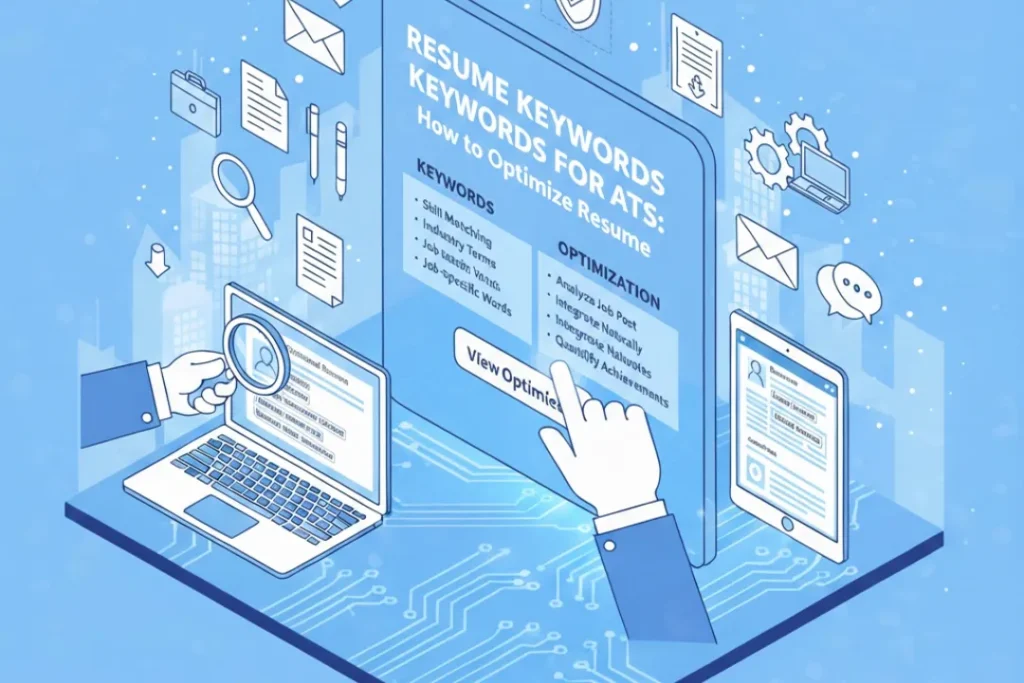
Resume Keywords for ATS: How to Optimize Your Resume

In today’s digital hiring landscape, your resume must first impress a robot before it ever reaches human eyes. Applicant Tracking Systems (ATS) scan, parse, and rank resumes based on keyword relevance, and approximately 75% of resumes are rejected by ATS before a recruiter even sees them. Understanding how to strategically incorporate the right keywords can mean the difference between landing an interview and having your application disappear into a digital black hole. This comprehensive guide will teach you exactly how to identify, optimize, and place resume keywords that help you beat ATS filters and showcase your qualifications effectively. Understanding Applicant Tracking Systems Applicant Tracking Systems are software applications that automate the hiring process by scanning resumes for specific keywords, qualifications, and criteria. When you submit your resume online, the ATS parses the document, extracting relevant information and comparing it against the job requirements. Resumes are then ranked based on how well they match the position’s keywords and requirements. How ATS Evaluates Your Resume The system scans for exact keyword matches and variations, identifies skills, qualifications, and experience levels, analyzes job titles and employment history, checks for required certifications or credentials, and assigns a match score or ranking. Resumes with higher match percentages are prioritized for human review, while those falling below a certain threshold may be automatically rejected. This means that even if you’re perfectly qualified for a position, poor keyword optimization can prevent your resume from ever being seen by a hiring manager. What Are Resume Keywords? Resume keywords are specific words and phrases that describe the skills, experience, qualifications, and competencies required for a particular job. They fall into several categories: Hard Skills: Technical abilities, software proficiencies, methodologies, tools, and specialized knowledge (e.g., Python, Project Management, Financial Modeling, AutoCAD) Soft Skills: Interpersonal abilities and personal attributes (e.g., Leadership, Communication, Problem-solving, Team Collaboration) Job Titles: Current and past position names (e.g., Marketing Manager, Software Engineer, Business Analyst) Certifications and Credentials: Professional licenses, degrees, and certifications (e.g., PMP, CPA, MBA, AWS Certified) Industry Jargon: Terminology specific to your field (e.g., Agile, Six Sigma, SEO, Clinical Trials) Action Verbs: Strong verbs that demonstrate achievements (e.g., Implemented, Optimized, Spearheaded) How to Identify the Right Keywords Finding the right keywords for your resume isn’t guesswork—it requires strategic analysis of job descriptions and industry standards. Step 1: Analyze the Job Description Thoroughly The job posting is your primary source for relevant keywords. Read it carefully and identify words and phrases that appear multiple times, skills listed in the requirements section, specific software, tools, or technologies mentioned, qualifications and certifications required, and industry-specific terminology. Example Job Description Analysis: Job Posting Excerpt: “Seeking experienced Digital Marketing Manager with expertise in SEO, Google Analytics, content strategy, and social media management. Must have 5+ years managing campaigns across multiple channels. PPC experience and Google Ads certification preferred.” Keywords Identified: Digital Marketing Manager, SEO, Google Analytics, content strategy, social media management, 5+ years experience, campaigns, multiple channels, PPC, Google Ads certification Step 2: Research Multiple Job Postings Don’t rely on a single job description. Review 5-10 similar positions to identify patterns and common keywords. Create a master list of frequently appearing terms and requirements. Step 3: Use Industry-Specific Resources Consult professional association websites for standard terminology, review LinkedIn profiles of people in similar roles, examine industry publications and trade journals, and check professional certification requirements. Step 4: Leverage Online Tools Several free tools can help identify important keywords including Jobscan (compares your resume against job descriptions), LinkedIn Job Search (shows skills employers are seeking), Google Trends (identifies trending industry terms), and professional networking groups where industry language is used. Strategic Keyword Placement Where you place keywords matters as much as which keywords you choose. ATS algorithms scan specific sections more carefully, and strategic placement increases your match score. Priority Placement Locations 1. Professional Summary/Profile Place high-priority keywords in your opening summary where ATS looks first. Example: “Results-driven Digital Marketing Manager with 7+ years of experience developing SEO strategies, managing social media campaigns, and utilizing Google Analytics to drive data-driven decisions. Proven expertise in content strategy, PPC advertising, and multi-channel marketing optimization.” This summary naturally incorporates major keywords while remaining readable. 2. Skills Section Create a dedicated skills section with keywords in list format for easy ATS scanning. Example: 3. Work Experience Descriptions Integrate keywords naturally within your achievement bullets. Example: “Developed comprehensive SEO strategy that improved organic search rankings by 145%, utilizing Google Analytics data to optimize content strategy and increase qualified traffic by 50,000 monthly visitors” 4. Job Titles If your actual job title differs from industry standard, consider including both. Example: 5. Education and Certifications List degrees, certifications, and credentials exactly as they appear in job requirements. Example: Keyword Optimization Techniques Use Both Acronyms and Full Terms ATS may search for either version, so include both where relevant. Examples: Include Keyword Variations Use different forms of the same keyword to capture various search parameters. Examples: Match Job Title Keywords If the posting says “Senior Software Engineer,” use that exact phrase rather than “Senior Developer” or “Lead Programmer” (unless that was your actual title). Incorporate Industry Terminology Use the language common in your field, not generic descriptions. Generic: “Helped customers with problems” Industry-Specific: “Provided tier-2 technical support, troubleshooting network connectivity issues and resolving 95% of tickets within SLA parameters” Prioritize Hard Skills Over Soft Skills While both matter, ATS typically weights measurable hard skills more heavily than soft skills. High Priority: Java, SQL, Financial Modeling, Budgeting, Adobe Creative Suite Lower Priority (but still include): Leadership, Communication, Teamwork, Creativity Common Keyword Mistakes to Avoid Mistake 1: Keyword Stuffing Cramming keywords unnaturally into your resume makes it unreadable to humans and can actually hurt your ATS score. Wrong: “Marketing marketing manager with marketing experience in digital marketing, content marketing, email marketing, and marketing analytics seeking marketing position in marketing department” Right: “Marketing Manager with 5+ years of experience in digital strategy, content development, email campaigns, and analytics-driven decision making” Mistake 2: Using the Wrong File Format Always submit as .docx or PDF (check posting preference). Avoid .pages, .odt, or image files that ATS cannot

Featured image
Resume

Common Resume Mistakes You Must Avoid

Your resume has approximately six seconds to make an impression on a recruiter. In that brief window, even small mistakes can derail your chances of landing an interview. While crafting the perfect resume takes effort, avoiding common pitfalls is often easier than you think. This comprehensive guide identifies the most frequent resume mistakes that cost candidates opportunities and provides actionable solutions to fix them. Whether you’re a recent graduate or experienced professional, eliminating these errors will dramatically improve your resume’s effectiveness and increase your interview success rate. Critical Content Mistakes Mistake 1: Spelling and Grammar Errors Nothing kills your credibility faster than typos and grammatical mistakes. A single spelling error signals carelessness and poor attention to detail—qualities no employer wants. Common Examples: The Fix: Proofread your resume at least three times. Read it backwards to catch spelling errors. Use spell-check but don’t rely on it exclusively—it won’t catch “their/there/they’re” mistakes. Have someone else review it with fresh eyes. Read your resume aloud to catch awkward phrasing. Use tools like Grammarly for additional checking. Pro Tip: Take a 24-hour break before final proofreading. Fresh eyes catch mistakes you’ve read past multiple times. Mistake 2: Using an Unprofessional Email Address Your email address is often the first thing recruiters see in your contact information. Unprofessional addresses immediately create a negative impression. Problematic Examples: The Fix: Create a professional email address using your name: firstname.lastname@email.com, firstinitiallastname@email.com, or firstname.middleinitial.lastname@email.com. If your name is common and already taken, add a number (graduation year or professional designation). Acceptable Examples: Mistake 3: Including Irrelevant Personal Information Many candidates waste valuable space with personal details that don’t belong on modern resumes and may introduce bias. Don’t Include: The Fix: Stick to professional contact information only: name, phone number, email, city and state, LinkedIn profile, and professional portfolio website (if relevant). Your resume should focus exclusively on professional qualifications. Exception: Some countries and industries have different cultural norms. Research expectations for your specific situation. Mistake 4: Writing an Objective Statement Instead of a Professional Summary Objective statements focusing on what you want from a job are outdated and self-centered. Recruiters care about what you can offer, not what you hope to gain. Weak Objective: “Seeking a challenging position in a dynamic organization where I can utilize my skills and grow professionally while contributing to company success.” This generic statement could apply to anyone seeking any job. Strong Professional Summary: “Results-driven Digital Marketing Manager with 6+ years of experience increasing organic traffic by 200%+ through data-driven SEO strategies. Proven expertise in content marketing, Google Analytics, and leading cross-functional teams to exceed KPIs.” The Fix: Replace objective statements with a 2-4 line professional summary highlighting your experience level, key skills, major achievements, and what makes you uniquely valuable. Focus on employer benefits, not your career goals. Mistake 5: Listing Job Duties Instead of Achievements One of the most common and damaging mistakes is describing what you were supposed to do rather than what you actually accomplished. Duty-Focused (Weak): “Responsible for managing social media accounts and creating content” Achievement-Focused (Strong): “Grew Instagram following from 5,000 to 50,000 in 8 months, generating 2,000+ qualified leads and contributing to 35% increase in online sales revenue” The Fix: Convert every bullet point to include action verb + specific task + quantifiable result. Ask yourself: “So what?” after each bullet. If you can’t answer with a meaningful outcome, rewrite it. Use numbers, percentages, dollar amounts, and timeframes whenever possible. Mistake 6: Making Your Resume Too Long or Too Short Resume length matters. Too long and recruiters won’t read it; too short and you appear underqualified. Length Guidelines: The Fix: Ruthlessly edit content for relevance. Remove experiences older than 10-15 years unless highly relevant. Consolidate similar roles. Focus on recent, relevant accomplishments. Use concise language without sacrificing clarity. If your resume is too short, expand your achievement descriptions with more detail and context, add relevant projects or certifications, include volunteer work or leadership activities, and incorporate a skills section. Formatting and Design Mistakes Mistake 7: Using Unprofessional or Difficult-to-Read Fonts Your font choice affects readability and professionalism. Fancy, decorative, or overly small fonts frustrate recruiters and confuse ATS. Fonts to Avoid: The Fix: Use professional, ATS-friendly fonts: Calibri (modern, clean), Arial (classic, safe), Times New Roman (traditional), Garamond (elegant, readable), Helvetica (clean, professional), or Georgia (distinctive yet professional). Set body text to 10-12 points. Use 14-16 points for your name in the header. Mistake 8: Overusing Color, Graphics, and Design Elements While creative design might seem appealing, excessive graphics often backfire. They confuse ATS systems and distract from your content. What to Avoid: The Fix: Keep design minimal and professional. Use one accent color maximum for section headers or your name. Stick to clean, simple formatting with clear section headers. Rely on white space and strategic bolding for visual hierarchy. Save creative designs for portfolios, not primary resumes. Mistake 9: Inconsistent Formatting Inconsistency appears sloppy and unprofessional, signaling poor attention to detail. Common Inconsistencies: The Fix: Choose one bullet style and use it throughout. Select one date format and apply consistently. Maintain uniform spacing between sections. Use the same formatting for all job titles, companies, dates, and locations. Check that all section headers use identical styling. Mistake 10: Including Headers and Footers with Critical Information Many ATS cannot read information in headers and footers, meaning critical contact details or experience may be lost. The Fix: Keep all important information in the main body of your resume. Place your name and contact information at the top of the first page, not in a header. If your resume spans multiple pages, include your name at the top of subsequent pages in the main body, not headers. Content Organization Mistakes Mistake 11: Not Tailoring Your Resume for Each Application Sending the same generic resume to every employer significantly reduces your success rate. The Problem: Generic resumes don’t address specific job requirements, lack relevant keywords for ATS optimization, and fail to demonstrate genuine interest in the particular role. The Fix: Create a master resume with all experiences and achievements. For each application, customize by reordering bullets to prioritize most relevant experiences,

Featured image
Resume

How to Write a Resume for a Career Change

Changing careers is one of the most challenging yet rewarding professional decisions you can make. However, the biggest hurdle often comes before you even start your new career: convincing employers to give you a chance despite your unconventional background. Your resume is the critical tool that bridges your past experience with your future aspirations. This comprehensive guide will show you exactly how to craft a career change resume that highlights transferable skills, demonstrates genuine commitment, and positions you as a compelling candidate—even when your work history doesn’t perfectly align with your target role. Understanding the Career Change Resume Challenge Traditional resumes follow a chronological format that showcases progressive advancement within a single field. When you’re changing careers, this approach works against you by emphasizing the mismatch between your background and target role. Recruiters spend an average of six seconds scanning resumes, and if they immediately see irrelevant job titles and industries, they may reject your application before discovering your transferable value. The key is reframing your experience to highlight relevant skills, downplaying industry-specific details, and demonstrating genuine commitment to your new direction. You’re not hiding your background—you’re strategically presenting it to show how your unique path makes you a valuable, differentiated candidate. Choosing the Right Resume Format For career changers, format selection is crucial. The three main options each serve different purposes. Hybrid/Combination Format (Recommended) This format combines the best elements of chronological and functional resumes. It leads with a skills-focused section that highlights transferable competencies, followed by a condensed chronological work history. Why It Works: Immediately showcases relevant skills before employment history. Satisfies recruiters who want to see work history. Passes ATS systems better than purely functional formats. Allows strategic emphasis on transferable achievements. Structure: Functional Format (Use Cautiously) Organizes content by skills rather than chronological work history. While this might seem ideal for career changers, many recruiters view purely functional resumes with suspicion, assuming you’re hiding something. When to Consider: Extreme career pivots with minimal transferable experience. Significant employment gaps combined with career change. Complete industry shift with no apparent connection. Modified Chronological Format Traditional chronological format with strategic modifications to emphasize transferable skills and relevant achievements. When to Use: Your previous roles had some overlap with your target career. You’re making a moderate rather than extreme pivot. Your industry is conservative and expects traditional formats. Crafting a Compelling Professional Summary Your professional summary is your elevator pitch—the most important section for career changers. It must immediately address the elephant in the room (your different background) while positioning it as an asset. Formula for Career Change Summaries Opening: State your target role or new professional identity Bridge: Mention years of transferable experience Evidence: Highlight 1-2 relevant achievements or skills Commitment: Reference training, certifications, or preparation you’ve undertaken Value Proposition: Explain what unique perspective you bring Example 1: Sales to Marketing “Marketing professional with 8+ years of client-facing sales experience and proven track record of understanding customer psychology and market dynamics. Successfully managed $5M in client relationships while completing Google Digital Marketing Certification and HubSpot Content Marketing certification. Brings unique blend of customer insights and data-driven strategy to drive engagement and conversions. Eager to leverage consultative selling expertise and analytical skills in dynamic marketing environment.” Example 2: Teacher to Corporate Trainer “Corporate Training and Development professional with 10 years of experience designing engaging learning experiences and facilitating knowledge retention for diverse audiences. Developed curriculum for 200+ students annually, achieving 95% learning objective completion rates. Completed ATD Certificate in Training and Development and currently pursuing CPTD certification. Skilled in needs assessment, instructional design, and measuring training effectiveness.” Example 3: Finance to Data Analytics “Data Analytics professional transitioning from financial analysis background with strong foundation in statistical modeling, SQL, and Python. Leveraged data-driven insights to identify $2M in cost savings through financial forecasting and trend analysis. Completed Google Data Analytics Certificate and built portfolio of 5 data visualization projects demonstrating proficiency in Tableau, Power BI, and predictive modeling.” What to Avoid in Your Summary Generic statements like “seeking challenging position” that could apply to anyone. Apologetic language like “despite my background in…” or “although I haven’t worked in…”. Overemphasis on what you’re trying to escape rather than what you’re pursuing. Vague claims without supporting evidence. Highlighting Transferable Skills Strategically Transferable skills are your secret weapon. These are competencies valuable across industries and roles—the bridge between your past and future. Core Transferable Skills by Category Leadership and Management: Team building, project management, conflict resolution, performance management, strategic planning, budget oversight Communication: Public speaking, writing, presentation delivery, stakeholder management, cross-functional collaboration, client relations Analytical and Problem-Solving: Data analysis, critical thinking, research, process improvement, troubleshooting, forecasting Technical: Software proficiency, digital literacy, technical documentation, system implementation, automation Organizational: Time management, multitasking, prioritization, attention to detail, deadline management Creating a Powerful Core Competencies Section Place this section immediately after your professional summary to showcase relevant skills before your work history. Example: Strategic Tips: Use keywords from your target job descriptions. Include both soft skills and technical competencies. Organize by relevance, not alphabetically. Quantify when possible (e.g., “Budget Management: Managed budgets up to $2M”). Reframing Your Work Experience Your employment history section requires strategic reframing to emphasize relevant aspects while downplaying industry-specific details. Job Title Strategy If your previous title is completely unrelated, consider these approaches: Option 1: Add Parenthetical Clarification Option 2: Lead with Function Over Title Achievement Bullet Strategy For each position, ask yourself: “What did I do that applies to my target role?” Then restructure bullets to emphasize those aspects. Before (Teacher → Corporate Trainer): “Taught English literature to high school students in classroom setting” After: “Designed and delivered engaging instructional programs for diverse learning styles, achieving 92% student performance improvement and consistently exceeding curriculum objectives” Before (Retail Manager → Operations Manager): “Managed retail store and supervised employees” After: “Directed operations for high-volume location generating $3M annually, optimizing workflows that improved efficiency by 25% while leading team of 15 across multiple shifts” Before (Engineer → Product Manager): “Designed mechanical components for manufacturing equipment” After: “Collaborated with cross-functional stakeholders to gather requirements, design solutions meeting technical specifications and budget constraints, and deliver projects 15% under budget on average”

Featured image
Resume

Resume Summary Examples for Every Job Title

Your resume summary is the most important section of your entire application—it’s the first thing recruiters read and often determines whether they continue reviewing your credentials. A well-crafted summary immediately communicates your value, highlights your most relevant qualifications, and positions you as the ideal candidate. This comprehensive guide provides 30+ proven resume summary examples across industries and career levels, along with formulas and tips to help you customize them for maximum impact. The Anatomy of a Powerful Resume Summary Before diving into examples, understand what makes a summary effective. The best summaries include your professional title or identity, years of relevant experience, 2-3 key skills or areas of expertise, 1-2 quantifiable achievements, and what makes you uniquely valuable. Length: 3-5 sentences or 50-100 words Tone: Confident, professional, results-focused Keywords: Incorporate terms from the job description Format: Third person without pronouns (avoid “I”) Entry-Level and Recent Graduate Summaries Marketing Coordinator “Recent marketing graduate with internship experience managing social media campaigns that increased engagement by 85% and generated 500+ leads. Proficient in Google Analytics, HubSpot, and content creation across digital platforms. Completed Google Digital Marketing Certificate and eager to apply data-driven strategies and creative thinking to drive brand awareness and customer acquisition.” Why It Works: Demonstrates real results despite limited experience, includes relevant tools and certifications, shows enthusiasm with concrete skills. Junior Software Developer “Computer Science graduate with strong programming foundation in Java, Python, and JavaScript. Developed 6 full-stack applications including e-commerce platform that achieved 2,000+ user registrations within first month. Experienced with Agile methodologies through academic projects and coding bootcamp. Passionate about clean code, continuous learning, and contributing to innovative development teams.” Why It Works: Highlights specific technologies, demonstrates practical application through projects, shows familiarity with industry practices. Administrative Assistant “Detail-oriented professional with 2 years of administrative experience supporting C-level executives in fast-paced environments. Managed complex calendars across multiple time zones, coordinated 30+ events annually, and improved office efficiency by implementing new filing system that reduced document retrieval time by 40%. Proficient in Microsoft Office Suite, scheduling software, and communication tools.” Why It Works: Quantifies experience and achievements, demonstrates organizational skills through specific examples, lists relevant technical proficiencies. Mid-Level Professional Summaries Project Manager “PMP-certified Project Manager with 7+ years of experience delivering complex initiatives on time and within budget. Led 25+ cross-functional projects valued at $15M+, achieving 96% on-time completion rate while reducing costs by average of 12%. Expert in Agile and Waterfall methodologies, stakeholder management, and risk mitigation. Proven ability to align project outcomes with strategic business objectives.” Why It Works: Opens with valuable certification, includes impressive metrics, demonstrates methodology expertise, connects to business impact. Sales Manager “Results-driven Sales Manager with 8 years of experience building high-performing teams and exceeding revenue targets. Consistently achieved 125%+ of quota while growing territory from $3M to $12M in annual revenue. Skilled in consultative selling, pipeline management, and coaching team members to top-performer status. Expertise in CRM optimization and data-driven sales strategies.” Why It Works: Emphasizes results over responsibilities, shows growth trajectory, highlights both individual and team leadership abilities. Human Resources Manager “Strategic HR Manager with 6 years of experience partnering with leadership to build organizational capability and drive employee engagement. Reduced turnover by 32% through improved onboarding and retention programs while increasing employee satisfaction scores from 72% to 91%. SHRM-CP certified with expertise in talent acquisition, performance management, employee relations, and HR analytics.” Why It Works: Positions HR as strategic partner, quantifies people-focused achievements, includes industry certification, covers breadth of HR functions. Marketing Manager “Digital Marketing Manager with 9+ years of experience developing integrated campaigns that drive measurable business growth. Increased organic traffic by 350% and generated $8M in attributed revenue through SEO, content marketing, and paid advertising strategies. Expert in Google Analytics, marketing automation, and translating data insights into actionable strategies. Proven track record of managing $2M+ marketing budgets with consistent ROI improvement.” Why It Works: Strong emphasis on measurable results, demonstrates analytical capabilities, shows budget responsibility, uses industry-standard tools. Financial Analyst “CFA Level II candidate with 5 years of financial analysis experience supporting strategic decision-making for Fortune 500 company. Developed financial models that identified $3.5M in cost-saving opportunities and forecasted revenue with 94% accuracy. Proficient in Excel VBA, Bloomberg Terminal, and Tableau. Skilled at presenting complex financial data to executive stakeholders in clear, actionable formats.” Why It Works: Highlights professional development pursuit, demonstrates tangible business impact, lists critical tools, emphasizes communication skills. Software Engineer “Full-Stack Software Engineer with 6 years of experience building scalable web applications using React, Node.js, and AWS. Reduced application load time by 65% and improved system reliability to 99.9% uptime while serving 500K+ monthly active users. Experienced in microservices architecture, CI/CD pipelines, and Agile development. Passionate about writing clean, maintainable code and mentoring junior developers.” Why It Works: Specifies technical stack, quantifies performance improvements, shows scale of impact, demonstrates leadership through mentoring. Senior-Level and Leadership Summaries Senior Product Manager “Strategic Product Manager with 10+ years of experience launching customer-centric products that drive revenue growth and market expansion. Led product portfolio generating $50M+ in annual revenue with 40%+ year-over-year growth. Expert in product strategy, roadmap development, and cross-functional team leadership. Successfully brought 8 products from concept to market launch, achieving average adoption rate of 65% within first year.” Why It Works: Demonstrates strategic thinking, impressive revenue numbers, shows end-to-end product ownership, includes adoption metrics. Operations Director “Operations Director with 12 years of experience optimizing processes, reducing costs, and scaling operations for high-growth companies. Improved operational efficiency by 45% while reducing overhead costs by $4M annually across manufacturing and distribution networks. Expertise in Lean Six Sigma, supply chain management, and change leadership. Successfully managed teams of 50+ across multiple locations during rapid organizational growth.” Why It Works: Focuses on outcomes (efficiency, cost reduction), demonstrates scope through team size and geography, includes process improvement methodologies. Senior Accountant “CPA-certified Senior Accountant with 8 years of progressive experience in financial reporting, analysis, and compliance. Managed month-end close processes, reducing closing time from 12 days to 6 days while maintaining 100% accuracy. Expert in GAAP, SOX compliance, and ERP systems (SAP, NetSuite). Recognized for identifying discrepancies that prevented $500K in

Featured image
Resume

Top Skills to Put on a Resume (Industry-Wise List)

The skills section of your resume is one of the most scrutinized parts by both applicant tracking systems and human recruiters. Including the right skills can mean the difference between landing an interview and having your application rejected. However, not all skills are created equal—what matters in technology differs vastly from what’s valued in healthcare or finance. This comprehensive guide provides industry-specific skill lists, explains how to identify the most relevant skills for your field, and offers strategies for presenting them effectively to maximize your chances of getting hired. Understanding Hard Skills vs. Soft Skills Before diving into industry-specific lists, it’s crucial to understand the two main categories of resume skills. Hard Skills (Technical Skills) Hard skills are specific, teachable abilities that can be measured and verified. They include technical knowledge, software proficiency, certifications, languages, tools, methodologies, and specialized techniques. Examples: Python programming, financial modeling, Adobe Photoshop, data analysis, project management, Spanish fluency, AutoCAD, SEO optimization Why They Matter: Hard skills are often used as screening criteria by ATS systems and prove you can perform specific job functions. Soft Skills (Transferable Skills) Soft skills are interpersonal attributes and personality traits that determine how you work with others and approach your job. They include communication, leadership, problem-solving, adaptability, teamwork, time management, critical thinking, and emotional intelligence. Examples: Leadership, communication, collaboration, adaptability, creative thinking, conflict resolution, attention to detail Why They Matter: Soft skills demonstrate how you’ll fit into the company culture and work with teams, which is increasingly important to employers. The Balance: Most effective resumes include both hard and soft skills, with emphasis on hard skills for technical roles and a more balanced approach for management or client-facing positions. How to Identify the Right Skills for Your Resume Step 1: Analyze Job Descriptions Review 5-10 job postings for your target role and identify skills that appear repeatedly. These are the most valued competencies in your field. Step 2: Match Your Skills to Requirements Create a master list of all your skills, then prioritize those that align with your target jobs. Include both required skills (must-haves) and preferred skills (nice-to-haves). Step 3: Use Industry Keywords Research industry-standard terminology. For example, “Agile” rather than “flexible project management” or “SEO” rather than “search optimization.” Step 4: Stay Current Skills evolve rapidly, especially in technology. Remove outdated skills and add emerging competencies relevant to your field. Industry-Specific Skills Lists Technology and IT Software Development: Data Science and Analytics: Cybersecurity: Business and Finance Accounting: Financial Analysis: Project Management: Marketing and Communications Digital Marketing: Content Creation: Graphic Design: Healthcare Nursing: Healthcare Administration: Sales and Customer Service Sales: Customer Success: Education and Training Teachers: Corporate Trainers: Engineering Mechanical Engineering: Civil Engineering: Human Resources HR Generalist: Universal Skills Valued Across All Industries Regardless of your field, these skills are universally valuable: Communication: Written, verbal, presentation, interpersonal Leadership: Team management, mentoring, decision-making, strategic thinking Problem-Solving: Critical thinking, analytical reasoning, creativity, troubleshooting Collaboration: Teamwork, cross-functional coordination, relationship building Adaptability: Flexibility, learning agility, change management, resilience Time Management: Prioritization, organization, multitasking, deadline management Digital Literacy: Microsoft Office Suite, email communication, basic computer skills Data Analysis: Excel, data interpretation, metrics tracking, reporting How to Format Your Skills Section Option 1: Categorized List Option 2: Simple List Option 3: Proficiency Levels Option 4: Integrated in Summary Incorporate key skills naturally within your professional summary and work experience rather than a separate section. Best Practices for Skills Sections Prioritize Relevance: List most important skills first based on job requirements Be Honest: Only include skills you can genuinely demonstrate Use Keywords: Mirror language from job descriptions for ATS optimization Avoid Soft Skill Lists: Instead of listing “communication, teamwork,” demonstrate these through achievements Include Proficiency: For languages and some technical skills, indicate your level Keep It Current: Remove outdated skills and add emerging competencies Limit the List: Include 10-20 most relevant skills rather than exhaustive lists Provide Context: When possible, demonstrate skills through achievements in experience section Emerging Skills for 2026 These skills are increasingly valuable across industries: Artificial Intelligence: AI tool proficiency (ChatGPT, Claude, Copilot), prompt engineering, AI ethics Automation: Process automation, workflow optimization, RPA tools Data Literacy: Data interpretation, basic analytics, data-driven decision making Digital Collaboration: Remote work tools, virtual facilitation, asynchronous communication Cybersecurity Awareness: Basic security practices, data protection, privacy compliance Sustainability: Environmental awareness, sustainable practices, ESG knowledge Emotional Intelligence: Self-awareness, empathy, relationship management Common Skills Section Mistakes Conclusion The skills you include on your resume should strategically position you as the ideal candidate for your target role. By understanding which hard and soft skills matter most in your industry, prioritizing those that align with specific job requirements, formatting them for both ATS and human readability, and demonstrating them through concrete achievements, you create a compelling case for your candidacy. Remember that your skills section should be a living part of your resume—regularly updated as you develop new competencies and as industry demands evolve. The right skills, presented effectively, open doors to interviews and opportunities in your chosen field.

Scroll to Top