
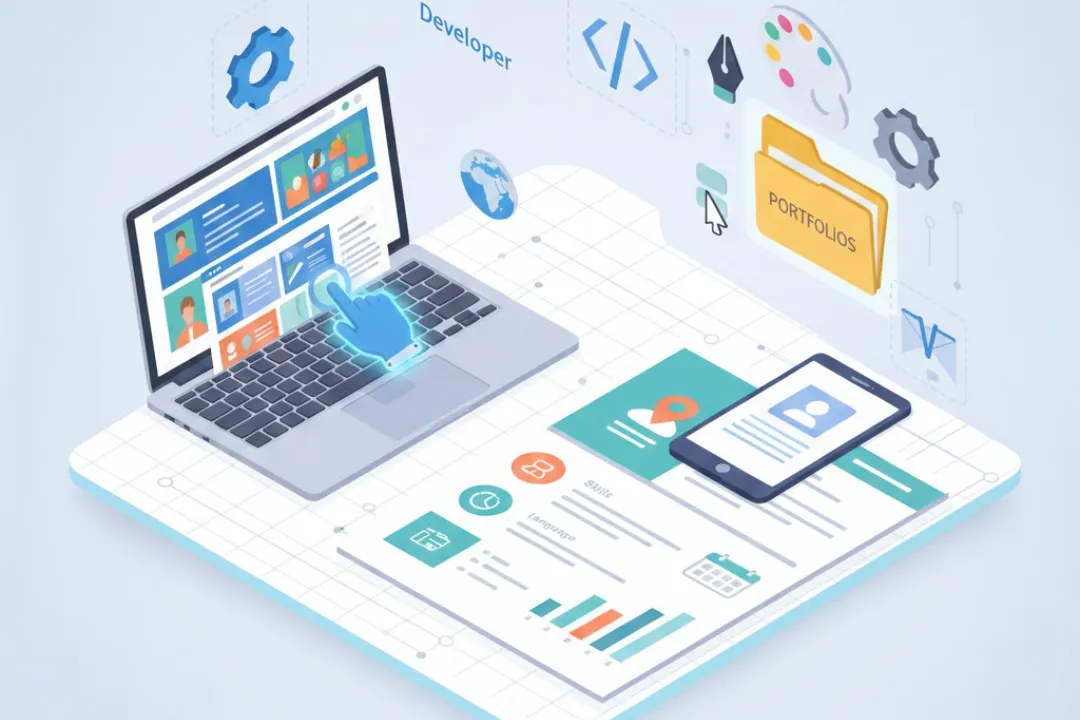
A portfolio site is your business window in the modern competitive digital environment. As a freelance designer, front-end developer, or full-stack engineer, it is likely that your first impression on a potential client or employer is your portfolio, and can reflect what you are able to do. Having a properly designed portfolio site is an opportunity to not only present your work, but also demonstrate your problem-solving strategy, technical abilities, and vision.
Essential Elements of a Strong Portfolio Website
Clear Navigation and User Experience
Your portfolio site must walk what you talk. The use of clean navigation, easy layout, and quick loading time show that you know what user experience is about. You should show your best work within a few seconds as visitors go through your home page. To do so, you can think about the use of a sticky navigation bar, deep-page breadcrumbs, and a search option in case you have many projects.
Compelling Project Showcases
Every project in your portfolio deserves proper presentation. Add good quality screenshots, mockups, or live demonstrations which emphasize the beauty of your work. Get deeper than just outward aesthetics by sharing how you designed, what were your difficulties and what were solutions you provided. To developers, add snippets, architecture, or links to GitHub that illustrate your technical expertise.
About Page That Connects
The humanization of your professional brand is done through your about page. Post about your experience, specialization, and motivation behind design or development. Add a professional photo, technical skills, tools that you are proficient in, and certifications. This personal appeal makes the potential clients or employers feel like they are working with you, and not as a service provider.
Contact Information and Call-to-Action
Have the opportunities come to you in an easy way. Show your email address, connect it to your professional social networks (LinkedIn, GitHub, Dribbble, Behance), and you can attach a contact form. Provide prominent calls-to-action on your site, be it View My Work, Hire Me or Download My Resume.
Portfolio Website Platforms and Technologies
Custom-Built Solutions
Creating a portfolio by yourself entails total freedom of creativity and demonstrates your coding skills. React, Vue, or Next.js are often the preferred frameworks of developers with dynamic portfolios that have smooth transitions and animations. This method takes more time to invest but yields a really unique presentation that is not like the sites made using templates.
Content Management Systems
WordPress is still used in portfolio websites because of its flexibility and a wide selection of themes. Webflow platform may be considered a tool that allows visual development, which bridges between custom code and templates. These solutions deliver professional outputs even to designers who may not be well versed with codes.
Specialized Portfolio Platforms
Such services as Behance, Dribbble, and GitHub Pages are aimed at creative professionals and developers. Although they are not as customizable, these platforms have their own communities and discovery, which can be used to reach more people. In order to reach as many people as possible, many professionals have their own custom portfolio site and profiles on these sites.
SEO Best Practices for Portfolio Websites
Optimize for Relevant Keywords
Keywords that will be used by research clients to find designers or developers in your niche. Naturally, use words such as UI/UX designer, full-stack developer, or mobile app designer or certain technologies that you have specialized in across the content of your web pages. These keywords should be strategically placed in your project descriptions, about page and blog posts (assuming that you have one).
Technical SEO Fundamentals
Make sure that your portfolio site loads fast through optimization of images and minimization of CSS and JavaScript as well as caching by the browser. Use responsive design in order to have the site work brilliantly on the mobile devices. Apply semantic HTML, hierarchy of headings and descriptive alt text of images. Post sitemap on Google Search Console and add structured data markup where relevant.
Quality Content and Regular Updates
The search engines prefer websites that show that they are active and updated. Add new projects to your portfolio on a regular basis, create case studies that explore your process, or create a blog about industry trends and techniques. This content strategy would not only enhance SEO but also make you a thought leader in your line of business.
Standing Out in a Crowded Market
Develop a Unique Visual Identity
Your personal brand should be displayed in your portfolio website. Select a color scheme, typography and visual aesthetic that works with your design philosophy. The overall consistency of your portfolio will produce a memorable impression and will show that you understand details.
Showcase Your Personality
There is a mixture of generic portfolio. Add soul into your writing style, projects you express, and contact with the site that leaves the visitor surprised and delighted. Give the visitors a reason to remember you, whether it be in the creation of creative loading-animations, the inclusion of micro-interaction, or considerate copywriting.
Include Testimonials and Social Proof
Testimonials or recommendation letters by clients or statistics showing the impact of the project make your portfolio more credible. In case you have worked with well known brands or have won any awards, place them at the forefront. Social proof minimizes the perceived risk of employing you and develops trust in prospective clients.
Common Portfolio Website Mistakes to Avoid
Do not overload visitors with all the projects you have done. Show your finest stuff that fits your desired opportunities. Do not use slow loading animations or effects that place more emphasis on flash than functionality. Always ensure that you update your contacts and check every form and link to make sure they are functional.
Conclusion
Your portfolio site is a changing narrative of your career. Take time to build a platform that reflects your talents and capabilities honestly, draws in your target clients or employers, and evolves as you do. Regardless of whether you are going to build your own solution or use the platform-based method, pay attention to effective communication, striking project presentations, and easy design. Frequent updates, search engine optimization and authentic personality will see your portfolio shine, in the crowded market of design and development.
Start building or refining your portfolio website today, and watch as opportunities begin finding you.