
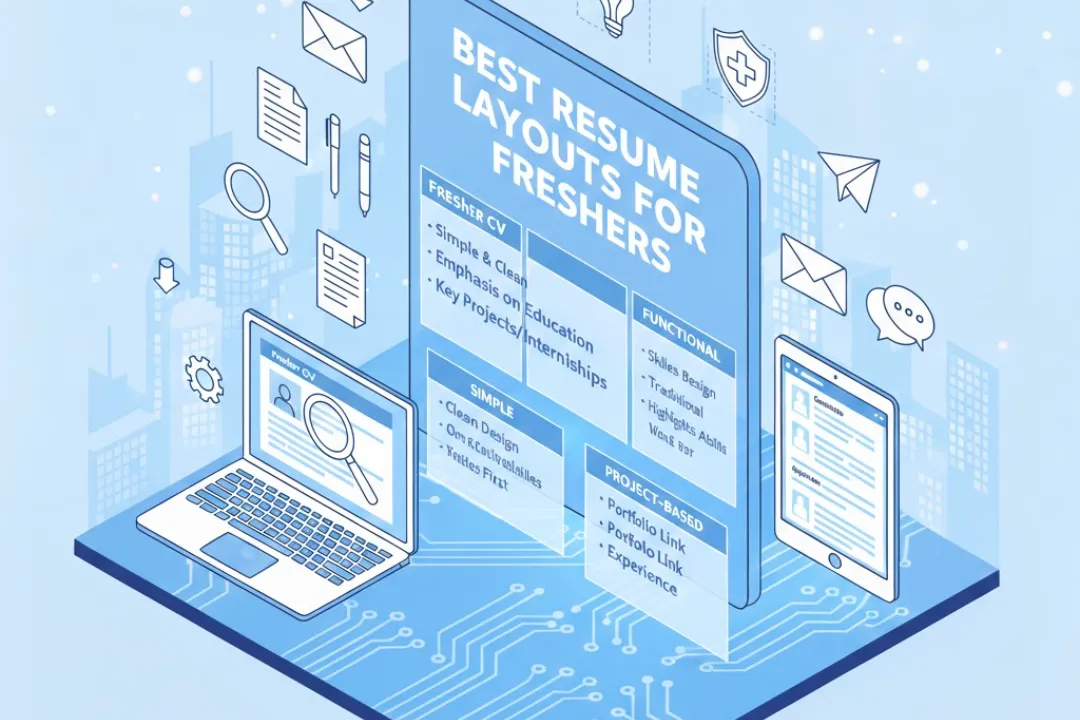
Landing your first job can be challenging, especially when you lack professional experience. However, a well-designed resume layout can effectively showcase your academic achievements, skills, internships, and potential to prospective employers. This comprehensive guide explores the best resume layouts for freshers, complete with practical examples and formatting strategies that will help you stand out in a competitive job market.
Understanding Resume Layouts for Entry-Level Candidates
A resume layout refers to the structure and visual organization of your resume content. For freshers, choosing the right layout is crucial because it determines how employers perceive your qualifications when you have limited work experience. The three primary resume layouts are chronological, functional, and combination formats, each serving different purposes for entry-level candidates.
The Chronological Layout: Building on Academic Foundation
The chronological layout is the most common and widely accepted format, even for freshers. This layout lists your experiences in reverse chronological order, starting with the most recent. While traditional chronological resumes emphasize work history, freshers can adapt this format by prioritizing education and relevant experiences.
Structure Example:
Start with a compelling professional summary or objective statement that highlights your career goals and key qualifications. For instance: “Recent Computer Science graduate with strong programming skills in Python and Java. Completed three internships focused on web development and eager to contribute to innovative software solutions.”
Follow with your education section prominently placed near the top. Include your degree, institution name, graduation date, GPA (if above 3.5), relevant coursework, and academic honors. For example:
“Bachelor of Science in Marketing State University, May 2025 GPA: 3.7/4.0 Relevant Coursework: Digital Marketing, Consumer Behavior, Brand Management, Marketing Analytics”
Next, include internships, volunteer work, academic projects, and part-time jobs. Even if these aren’t traditional corporate roles, they demonstrate work ethic and transferable skills.
The Functional Layout: Skills-First Approach
The functional resume layout emphasizes skills and competencies rather than chronological work history. This format works exceptionally well for freshers who want to highlight their capabilities developed through coursework, projects, volunteer work, and extracurricular activities.
Structure Example:
Begin with contact information and a strong objective statement. Then create skill-based categories that align with your target job. For a marketing fresher, categories might include:
Digital Marketing Skills: “Managed social media campaigns for university events, increasing engagement by 85% through targeted content strategy and analytics-driven optimization. Proficient in Google Analytics, Hootsuite, and Canva.”
Research & Analysis: “Conducted comprehensive market research for senior capstone project, analyzing consumer trends across demographics of 500+ participants. Presented findings that informed product positioning strategy.”
Content Creation: “Developed content for university blog with 10,000+ monthly readers. Created SEO-optimized articles that improved search rankings by 40%.”
Include a brief employment history section afterward with company names, titles, and dates, without extensive descriptions since your skills section already showcases your capabilities.
The Combination Layout: Best of Both Worlds
The combination layout merges elements of chronological and functional formats, making it ideal for freshers with some relevant experience through internships, projects, or part-time work. This layout allows you to highlight both skills and the context in which you developed them.
Structure Example:
Start with contact information and professional summary. Create a “Core Competencies” or “Technical Skills” section that lists your key abilities in a scannable format:
“Core Competencies: Data Analysis | SQL & Python | Statistical Modeling | Microsoft Excel | Tableau | Problem Solving | Team Collaboration”
Follow with your experience section that combines chronological listing with achievement-focused descriptions:
Marketing Intern, ABC Corporation (June 2024 – August 2024) “Assisted in launching email marketing campaign that achieved 22% open rate, exceeding industry average by 8%. Analyzed campaign metrics and created presentation for senior management with actionable recommendations.”
Then include education, projects, certifications, and additional sections as relevant.
Essential Sections Every Fresher Resume Should Include
Regardless of which layout you choose, certain sections are non-negotiable for freshers:
Contact Information: Include your full name, phone number, professional email address, LinkedIn profile URL, and location (city and state). Avoid unprofessional email addresses.
Education: This section deserves prominence for freshers. List degrees in reverse chronological order, including relevant coursework that aligns with your target job, academic achievements, dean’s list honors, and scholarships.
Projects: Academic and personal projects demonstrate practical application of knowledge. Describe projects with specific outcomes: “Developed e-commerce website using React and Node.js, implementing secure payment gateway and user authentication system. Project served 200+ test users with 98% satisfaction rate.”
Skills: Divide skills into categories such as technical skills, software proficiency, language skills, and soft skills. Be honest about proficiency levels.
Internships and Work Experience: Even unrelated jobs demonstrate responsibility and work ethic. Focus on transferable skills like customer service, time management, teamwork, and communication.
Formatting Guidelines for Maximum Impact
Proper formatting ensures your resume is both visually appealing and ATS-compatible. Use a clean, professional font like Calibri, Arial, or Times New Roman in 10-12 point size. Maintain consistent formatting throughout with uniform bullet points, heading styles, and spacing.
Keep margins between 0.5 and 1 inch on all sides to maximize space while maintaining readability. Use bold text for headings and company names, but avoid excessive formatting that can confuse applicant tracking systems.
Limit your resume to one page. Freshers rarely have enough relevant experience to warrant a second page, and conciseness demonstrates your ability to prioritize important information.
Common Mistakes to Avoid
Many freshers make critical errors that undermine their resumes. Avoid using generic objective statements that could apply to any candidate. Instead of “Seeking a challenging position to utilize my skills,” write “Recent engineering graduate seeking to apply machine learning expertise to solve real-world problems in autonomous vehicle development.”
Don’t include irrelevant personal information like marital status, age, or photograph (unless specifically requested). Avoid listing references directly on your resume; instead, note they’re available upon request or omit this entirely.
Never lie or exaggerate qualifications. Be truthful about skills, experiences, and achievements while presenting them in the most favorable light.
Tailoring Your Layout to Industry Standards
Different industries have varying expectations for resume presentation. Technology and creative fields may appreciate subtle design elements, while conservative industries like finance and law prefer traditional, text-focused layouts. Research industry norms and examine resume examples from successful professionals in your target field.
Creating an effective resume as a fresher requires strategic thinking about layout, content, and presentation. Choose a format that best showcases your strengths, maintain clean and professional formatting, and focus on demonstrating potential through academic achievements, projects, and transferable skills.