
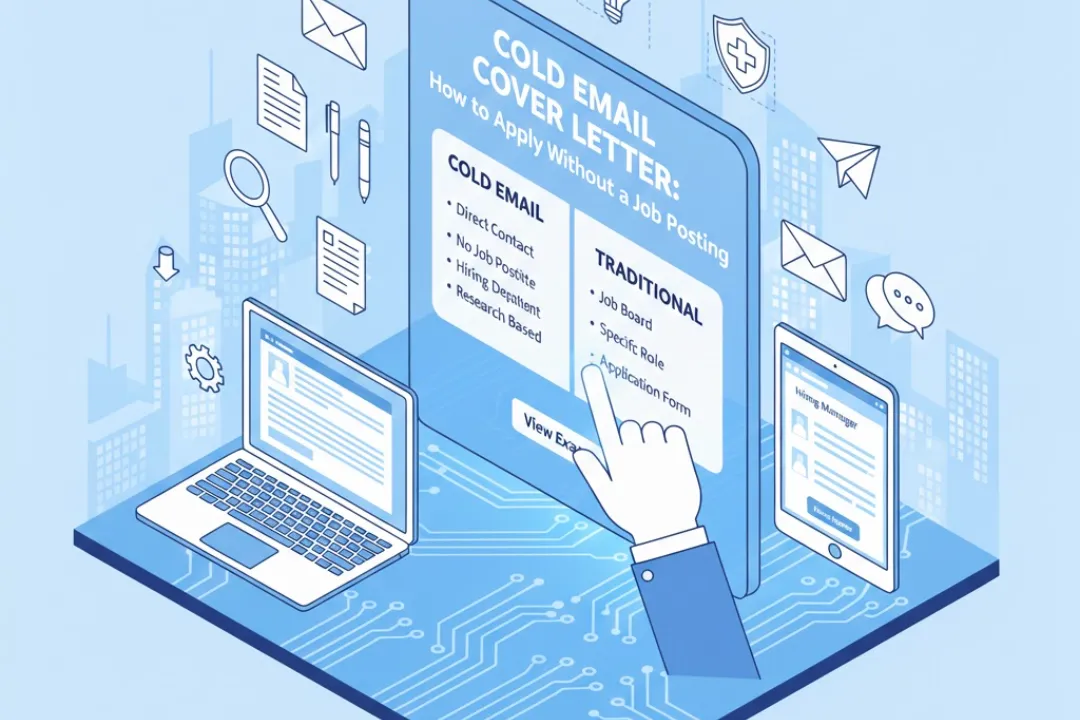
The best opportunities aren’t always advertised on job boards. Many positions are filled through networking, internal referrals, or proactive outreach before they’re ever publicly posted. Sending a cold email cover letter allows you to tap into this hidden job market, positioning yourself as a solution to problems the company may not have even advertised yet. This comprehensive guide teaches you how to craft compelling cold email cover letters that open doors and create opportunities where none previously existed.
Understanding the Cold Email Cover Letter
A cold email cover letter is an unsolicited message sent to a company or hiring manager expressing interest in working for their organization, even when no specific position has been advertised. Unlike traditional cover letters that respond to job postings, cold emails require you to demonstrate value, show genuine interest in the company, and create your own opportunity.
The key difference lies in your approach. Traditional cover letters match your qualifications to stated requirements. Cold emails must identify unstated needs, demonstrate research-backed understanding of company challenges, and position yourself as someone who can contribute meaningfully to organizational goals.
Research: The Foundation of Effective Cold Emails
Successful cold email cover letters begin with thorough research. Generic mass emails are immediately recognizable and ineffective. Instead, invest time understanding the company’s mission, values, recent news, growth trajectory, challenges, and culture.
Start by exploring the company website thoroughly, paying particular attention to their About Us section, recent blog posts, press releases, and product or service offerings. Review their social media presence on LinkedIn, Twitter, and industry-specific platforms to understand their voice, priorities, and recent initiatives.
Search for recent news articles, funding announcements, expansion plans, or leadership changes that might indicate growth or evolving needs. Examine employee profiles on LinkedIn to understand team composition, common backgrounds, and potential gaps in expertise. Check industry publications for mentions of the company and insights into market positioning.
This research serves multiple purposes. It helps you identify potential opportunities, enables you to speak knowledgeably about the company, demonstrates genuine interest rather than opportunistic outreach, and provides specific details to reference in your email.
Identifying the Right Contact Person
Sending your cold email to the right person dramatically increases response rates. Avoid generic email addresses like info@company.com or careers@company.com. Instead, identify specific decision-makers who would have authority to create or fill positions in your target area.
For most roles, the hiring manager or department head is ideal. Use LinkedIn to identify people with titles like Director of Marketing, VP of Engineering, or Head of Operations, depending on your field. For smaller companies, reaching out to founders or C-level executives can be effective.
When possible, find email addresses through company websites, LinkedIn contact information, or tools like Hunter.io or RocketReach. Follow standard corporate email formats such as firstname.lastname@company.com or first.last@company.com if direct addresses aren’t available.
Crafting an Attention-Grabbing Subject Line
Your subject line determines whether your email gets opened or deleted. In 2026, professionals receive hundreds of emails daily, making your subject line critical to success. Avoid generic phrases like “Job Inquiry” or “Seeking Opportunities” that provide no compelling reason to open.
Instead, create subject lines that are specific, value-focused, and relevant to the recipient. Examples include: “Marketing Automation Specialist Interested in Scaling Your SaaS Growth,” “Data Scientist Following Your Recent Series B Announcement,” or “Experienced Product Designer Inspired by Your Healthcare Innovation.”
Reference mutual connections if applicable: “Referred by Sarah Johnson – Marketing Strategy Discussion.” Mention recent company news: “Impressed by Your Expansion into European Markets.” Keep subject lines under sixty characters for mobile optimization while ensuring they clearly communicate your purpose.
Structuring Your Cold Email Cover Letter
The structure of your cold email should be concise, personalized, and value-oriented. Begin with a brief, engaging opening that establishes context and demonstrates genuine interest. Reference something specific about the company that caught your attention.
Example: “I’ve been following TechCorp’s impressive growth in the fintech space, particularly your recent launch of the mobile payment platform that’s disrupting traditional banking. Your commitment to financial inclusion aligns perfectly with my passion for creating accessible technology solutions.”
Quickly establish your credibility and relevant expertise in the second paragraph. Focus on accomplishments that would resonate with this specific company based on your research.
Example: “As a senior software engineer with seven years of experience building scalable financial applications, I’ve led development teams that increased transaction processing speed by sixty-five percent while maintaining rigorous security standards. My work on mobile-first architecture at FinanceApp resulted in three million active users within the first year of launch.”
The third paragraph should articulate the value you could bring to their organization. Instead of asking what they can do for you, focus on what you can do for them. Identify potential challenges or opportunities based on your research and position yourself as part of the solution.
Example: “Given your expansion plans and the technical challenges of scaling infrastructure to support international growth, I believe my expertise in cloud architecture and multi-region deployment could contribute to your platform’s continued success. I’m particularly interested in how machine learning could enhance your fraud detection capabilities.”
Close with a clear, low-pressure call to action that makes it easy for them to respond. Avoid demanding interviews or appearing entitled to their time. Instead, suggest a brief conversation to explore mutual fit.
Example: “I’d welcome the opportunity to discuss how my background aligns with TechCorp’s goals. Would you be available for a brief fifteen-minute call next week to explore potential opportunities? I’m flexible with timing and happy to work around your schedule.”
Tone and Style Considerations
Your tone should strike a balance between professional and personable. Avoid overly formal language that sounds stiff and impersonal, but maintain professionalism appropriate to your industry and the company culture. Tech startups may appreciate a more casual, enthusiastic tone, while financial institutions expect traditional business communication.
Be confident without appearing arrogant. Express genuine enthusiasm without seeming desperate. Show that you’ve done your homework without overwhelming the reader with excessive detail. Keep paragraphs short and scannable, using white space effectively for easy reading on mobile devices.
Following Up Strategically
Don’t expect immediate responses to cold emails. Decision-makers are busy, and your email may be buried in their inbox. Plan to follow up once after seven to ten days if you haven’t received a response.
Your follow-up should be brief, reference your original email, and add new value rather than simply repeating your request. Example: “I wanted to follow up on my email from last week regarding potential opportunities in your engineering department. I recently read your CTO’s interview about moving toward microservices architecture and thought you might find my case study on this transition interesting.” Include a link to relevant work samples or articles.
If you receive no response after one follow-up, respect their silence and move on. Persistent badgering damages your professional reputation and eliminates any future opportunities with that organization.
Common Mistakes to Avoid
Several critical mistakes can doom cold email cover letters. Never send identical mass emails to multiple people at the same company. Avoid lengthy emails that exceed three hundred words—busy professionals won’t read them. Don’t focus exclusively on what you want without addressing company needs.
Never attach your resume to the initial cold email unless specifically requested. Attachments from unknown senders often go unopened due to security concerns. Instead, include a link to your LinkedIn profile or online portfolio. Avoid typos, grammatical errors, or incorrect company information that suggest carelessness.
Don’t apologize for reaching out or use phrases like “I know you’re busy, but…” that undermine your message before it begins. Confidence and respectful directness serve you better than apologetic language.
Measuring Success and Adjusting Approach
Track your cold email efforts to identify what works. Monitor response rates, positive replies versus rejections, and which subject lines perform best. A five to ten percent response rate is considered successful for cold outreach. Use insights from responses to refine your approach, experimenting with different subject lines, email lengths, and value propositions to optimize results over time.