
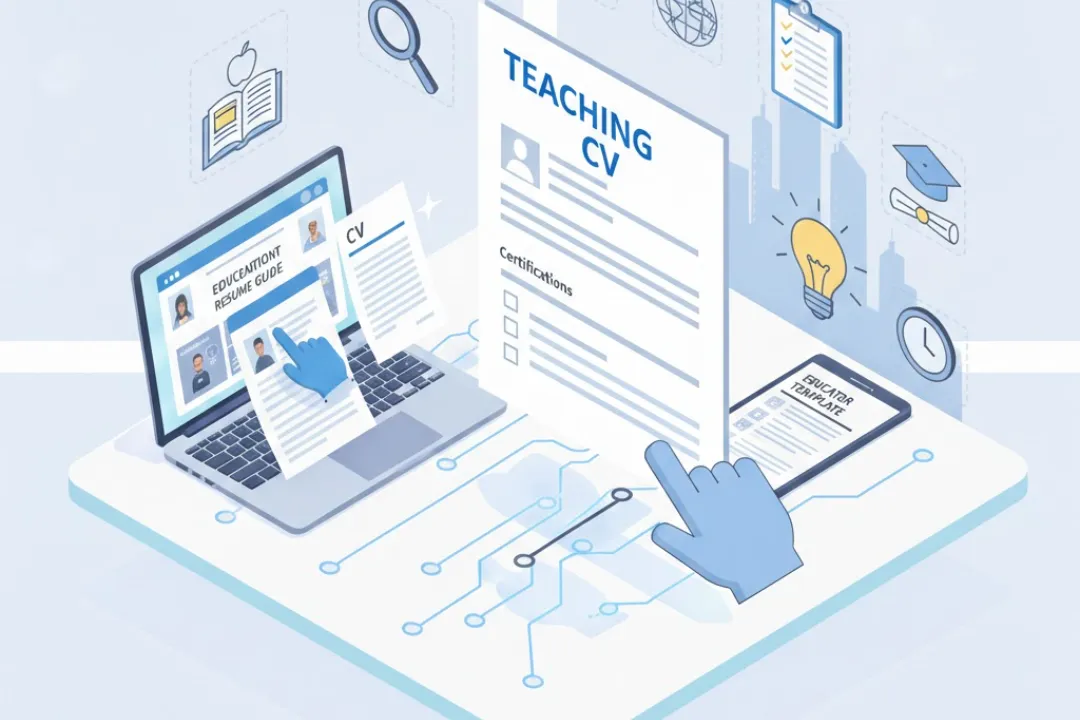
Landing your dream teaching position starts with a compelling resume that showcases your educational expertise, classroom management skills, and passion for student development. Whether you’re a new graduate entering the field or an experienced educator seeking advancement, your resume serves as your first impression to hiring committees and school administrators.
Understanding the Education Job Market
The education sector has unique hiring practices and expectations. School districts and educational institutions look for candidates who demonstrate not only subject matter expertise but also strong interpersonal skills, adaptability, and a commitment to student success. Your resume must reflect these qualities while highlighting your teaching credentials and accomplishments.
Essential Resume Sections for Educators
Contact Information
Begin with your full name, phone number, professional email address, and city/state location. Consider adding your LinkedIn profile or professional teaching portfolio website. Ensure your email address is professional—avoid outdated or casual handles that might undermine your credibility.
Professional Summary or Objective
This critical section appears immediately after your contact information and sets the tone for your entire application. For experienced teachers, craft a professional summary highlighting your years of experience, specializations, and key achievements. New teachers should use an objective statement that emphasizes education, certifications, and enthusiasm for the profession.
Example: “Dedicated elementary educator with 8+ years of experience implementing differentiated instruction strategies. Proven track record of improving student reading proficiency by 25% through innovative literacy programs and data-driven instruction.”
Certifications and Licenses
Education positions require specific credentials, so prominently display your teaching certifications, licenses, and endorsements. Include the state where you’re certified, certification type, grade levels, subject areas, and expiration dates. This information is often the first thing hiring managers verify.
Education
List your degrees in reverse chronological order, including your institution name, degree type, major, and graduation date. For recent graduates, include relevant coursework, academic honors, and student teaching experiences. Advanced degrees like master’s or doctoral programs should be highlighted, particularly if they align with the position you’re seeking.
Teaching Experience
This section forms the core of your education resume. List positions in reverse chronological order, including the school name, location, your title, and employment dates. Under each position, use bullet points to describe your responsibilities and accomplishments.
Focus on measurable achievements rather than just listing duties. Instead of “Taught 5th-grade mathematics,” write “Implemented hands-on mathematics curriculum for 28 fifth-grade students, resulting in 30% improvement in standardized test scores.”
Include details about curriculum development and implementation, classroom management techniques, student assessment and progress monitoring, parent communication and collaboration, technology integration, and extracurricular involvement.
Skills Section
Educators need diverse skill sets spanning pedagogy, technology, and interpersonal abilities. Create a skills section that highlights both hard and soft skills relevant to teaching.
Hard skills include curriculum development and lesson planning, learning management systems like Google Classroom, Canvas, and Blackboard, educational technology tools, data analysis and assessment, special education accommodations, and bilingual instruction capabilities.
Soft skills encompass classroom management, communication and presentation, collaboration and teamwork, adaptability and flexibility, patience and empathy, and problem-solving.
Additional Sections
Consider including these optional sections to strengthen your application. Professional development sections list relevant workshops, conferences, and training programs that demonstrate your commitment to continuous learning. Awards and recognition include teaching awards, grants received, or special recognitions from students, parents, or administrators. Publications and presentations showcase scholarly work if you’ve contributed to educational journals or presented at conferences. Volunteer experience demonstrates your dedication to service through educational volunteer work, tutoring, or community involvement.
Formatting Best Practices
Your resume’s visual presentation matters as much as its content. Use a clean, professional layout with consistent formatting throughout. Stick to standard fonts like Arial, Calibri, or Times New Roman in 10-12 point size. Ensure adequate white space to improve readability and avoid overwhelming the reader.
Keep your resume to 1-2 pages maximum. New teachers can typically fit relevant information on one page, while experienced educators with extensive accomplishments may need two pages. Never sacrifice readability for the sake of cramming everything onto a single page.
Use action verbs to begin each bullet point: “Developed,” “Implemented,” “Facilitated,” “Collaborated,” “Designed,” “Assessed.” These strong verbs create a more dynamic and engaging presentation of your experience.
Tailoring Your Resume for Specific Positions
Avoid using a generic resume for all applications. Carefully read each job posting and customize your resume to match the specific requirements and preferences mentioned. If a district emphasizes technology integration, highlight your experience with educational technology. If they seek expertise in differentiated instruction, feature your relevant accomplishments prominently.
Use keywords from the job description throughout your resume. Many school districts use applicant tracking systems that screen resumes for specific terms before human reviewers see them. Incorporating relevant keywords increases your chances of passing this initial screening.
Common Mistakes to Avoid
Don’t include outdated or irrelevant information. Your high school achievements or unrelated work experiences from decades ago typically don’t belong on your teaching resume. Focus on recent, relevant experiences that demonstrate your qualifications for the position.
Avoid vague descriptions of your responsibilities. “Responsible for teaching students” tells hiring managers nothing meaningful. Instead, specify what you taught, how you taught it, and what results you achieved.
Never submit a resume with typos, grammatical errors, or formatting inconsistencies. As an educator, you’re expected to model excellent written communication. Proofread multiple times and consider having a colleague review your resume before submission.
Final Thoughts
Your teaching resume is a living document that should evolve throughout your career. Regularly update it with new certifications, professional development, and accomplishments. Even when you’re not actively job searching, maintaining a current resume helps you prepare for unexpected opportunities and serves as a valuable record of your professional growth.
Remember that your resume works in conjunction with your cover letter and references to present a complete picture of your qualifications. Invest time in creating a polished, professional resume that accurately represents your skills, experience, and passion for education. With a well-crafted resume, you’ll be well-positioned to advance your teaching career and make a lasting impact on students’ lives.