
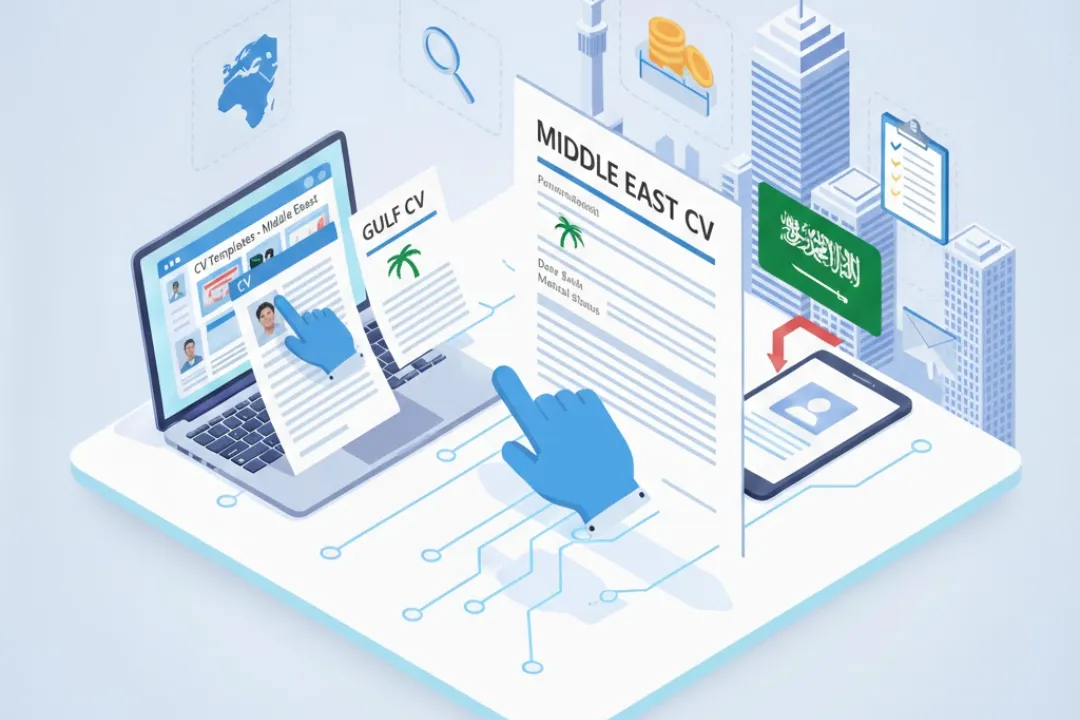
Landing a job in the Middle East requires more than just qualifications and experience. Your curriculum vitae serves as your first impression, and in competitive markets like the UAE, Saudi Arabia, Qatar, and Oman, having a professionally formatted CV can make the difference between securing an interview and being overlooked.
Understanding Middle East CV Expectations
The Middle East job market has unique expectations when it comes to CV presentation. Unlike Western countries where brevity is valued, employers in Gulf Cooperation Council (GCC) countries often expect comprehensive CVs that provide detailed information about your background, qualifications, and personal details.
Most Middle Eastern employers prefer CVs that are between two to three pages long, allowing candidates to thoroughly showcase their experience and credentials. This differs significantly from the one-page resume standard in countries like the United States, making it essential to choose the right template that accommodates this preference.
Essential Components of Middle East CVs
When selecting or creating a CV template for Middle East positions, ensure it includes specific sections that local employers expect. Your CV should prominently feature personal information including your full name, nationality, date of birth, marital status, and current location. While some of these details might be omitted in Western CVs due to discrimination laws, they are standard requirements in Middle Eastern job applications.
A professional photograph is almost mandatory for Middle East CVs. Choose a template with a dedicated space for a high-quality headshot. This should be a formal, business-appropriate photo with professional attire and a neutral background. The photograph placement is typically in the top right or left corner of the first page.
Your contact information should be comprehensive, including your email address, phone number with country code, and LinkedIn profile URL. Given the international nature of Middle East job markets, ensuring your contact details facilitate easy communication across time zones is crucial.
Formatting Styles That Work
Middle East employers generally prefer clean, professional CV templates with clear section divisions. Chronological formats work best, as they allow recruiters to quickly understand your career progression. Reverse chronological order is the standard, starting with your most recent position and working backward.
Conservative color schemes are recommended. While creative industries might accept some color variation, most positions in the Middle East favor black text on white backgrounds with minimal accent colors. Navy blue, dark gray, or burgundy can be used sparingly for section headers or lines to add visual interest without appearing unprofessional.
Font selection matters significantly. Stick with professional, easily readable fonts such as Arial, Calibri, Times New Roman, or Garamond. Font sizes should range between 10 and 12 points for body text, with slightly larger sizes for your name and section headings. Consistency in font usage throughout the document demonstrates attention to detail.
Tailoring Templates by Country
Different Middle Eastern countries have subtle preferences worth considering. In the UAE, particularly in Dubai and Abu Dhabi, international standards blend with local expectations. CV templates with modern, sleek designs work well, especially for positions in finance, technology, and hospitality sectors.
Saudi Arabia’s job market traditionally favors more conservative CV presentations. Templates with straightforward layouts and minimal design elements are appreciated. Include Arabic translations of your name and job titles if applying to government entities or traditional Saudi companies.
Qatar’s rapidly developing job market, especially sectors related to infrastructure and education, values CVs that highlight international qualifications and experience. Templates that emphasize educational credentials and certifications work particularly well for Qatari applications.
Digital Template Resources
Numerous platforms offer CV templates specifically designed for Middle East job applications. Microsoft Word and Google Docs provide free templates that can be customized to meet regional requirements. Professional networking sites like LinkedIn allow you to download your profile as a formatted CV, which can serve as a starting point.
Specialized job portals such as Bayt.com and GulfTalent.com offer region-specific CV builders that automatically format your information according to Middle East standards. These platforms understand local employer expectations and structure templates accordingly.
For those seeking premium options, websites like Canva, Resume.io, and Novoresume provide professionally designed templates with Middle East-friendly layouts. While some require subscriptions, they offer sophisticated designs that stand out while maintaining professionalism.
Common Mistakes to Avoid
Avoid overly creative or unconventional CV templates unless applying for creative positions. Middle East employers, particularly in traditional sectors like oil and gas, banking, and government, prefer conventional presentations. Infographic-style CVs or those with excessive graphics often get rejected by applicant tracking systems.
Don’t use templates that lack space for detailed work descriptions. Middle East employers want to understand exactly what you accomplished in each role. Choose templates with adequate white space and section divisions that allow for comprehensive bullet points under each position.
Neglecting to include visa status is another common oversight. Your CV template should have a clear section mentioning your current visa status, notice period, and availability to join. This information is crucial for Middle East recruiters who need to understand hiring logistics immediately.
Optimizing for Applicant Tracking Systems
Many Middle East companies, especially larger corporations and multinational organizations, use applicant tracking systems (ATS) to screen CVs. Choose templates that are ATS-friendly, meaning they avoid complex formatting, tables, text boxes, or graphics that software cannot read properly.
Stick with standard section headings that ATS software recognizes such as “Work Experience,” “Education,” “Skills,” and “Certifications.” Creative heading names might confuse the system and result in your CV being filtered out before human eyes ever see it.
Save your CV in both PDF and Word formats. While PDF preserves formatting, some Middle East companies specifically request Word documents. Having both versions ready ensures you can submit in the preferred format immediately.
Final Recommendations
Selecting the right CV template for Middle East jobs requires balancing professional presentation with regional expectations. Prioritize clarity, comprehensiveness, and cultural appropriateness over creative design. Your template should showcase your qualifications effectively while respecting the formal business culture prevalent across Gulf countries.
Regularly update your CV template to reflect current trends while maintaining core elements that Middle East employers expect. With the right template and thorough customization, your CV will make a strong first impression in this competitive and rewarding job market.