
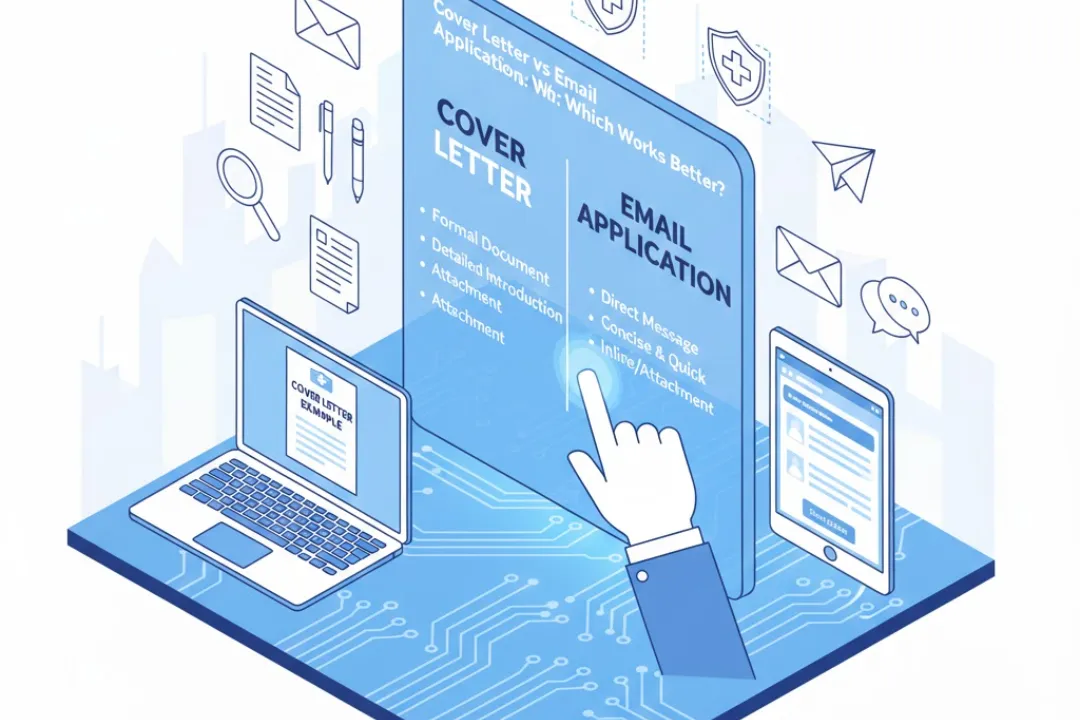
The job application process has evolved significantly in the digital age, leaving many candidates uncertain about how to properly introduce themselves to potential employers. Should you attach a formal cover letter, craft a compelling email message, or do both? Understanding the differences between traditional cover letters and email applications, along with knowing when to use each approach, can significantly impact your job search success.
Understanding the Fundamental Differences
A traditional cover letter is a formal document, typically created as a separate PDF or Word file, that follows business letter formatting conventions. It includes a header with contact information, a formal salutation, body paragraphs explaining your qualifications, and a professional closing with your signature. This document is usually attached to your resume when applying through online portals or email.
An email application, conversely, uses the body of the email itself as your introductory message. Your resume and potentially other documents are attached, but your pitch to the employer appears directly in the email text rather than in a separate file. This approach is more conversational and immediate, designed for the way people actually consume digital communications today.
The Case for Traditional Cover Letters
Cover letters have remained a staple of professional job applications for decades, and for good reason. They provide a structured, comprehensive format that allows you to tell your professional story thoroughly. When formatted properly and saved as a PDF, cover letters present a polished, professional image that demonstrates you understand business communication standards.
Traditional cover letters work particularly well for formal industries such as law, finance, academia, government, and established corporate environments where protocol and formality matter. These sectors often have hiring processes that explicitly request cover letters as part of their application requirements. Submitting a properly formatted cover letter shows you can follow instructions and respect professional conventions.
The separate document format also ensures your message won’t be cut off or reformatted by email clients. You control exactly how the hiring manager sees your information, with consistent formatting, spacing, and presentation across all devices and platforms. This predictability can be valuable when first impressions matter.
Additionally, cover letters provide more space to elaborate on complex career transitions, explain employment gaps, or detail specific projects and achievements that demonstrate your qualifications. The formal structure allows for three to four substantial paragraphs that build a comprehensive case for why you’re the ideal candidate.
The Case for Email Applications
Email applications have gained favor because they align with how modern professionals actually work. Hiring managers receive hundreds of emails daily, and they’re more likely to read a concise, well-written message in their inbox than open multiple attachments. An email application puts your pitch immediately in front of decision-makers without requiring additional clicks.
This format works exceptionally well for startups, tech companies, creative industries, and organizations with casual or innovative cultures. These employers often prefer efficiency and directness over formality. A conversational email that quickly highlights your relevant qualifications respects their time while still showcasing your communication skills.
Email applications also excel for networking referrals, internal positions, or situations where you have an existing relationship with someone at the company. When a mutual connection has recommended you or you’re applying for a posted position after attending a company event, a friendly yet professional email feels more natural than a stiffly formal cover letter.
The immediacy of email applications can also work in your favor for time-sensitive opportunities. When companies need to fill positions quickly, they appreciate candidates who can communicate efficiently without unnecessary formality that might slow the process.
When Formatting and Instructions Matter Most
The most critical factor in choosing between a cover letter and email application is following the employer’s explicit instructions. If a job posting requests a cover letter, you must provide one as a separate document. Failure to follow these instructions suggests you can’t pay attention to details or follow directions—fatal flaws for any candidate.
When no specific format is requested, research the company culture and industry norms. Review their website, social media presence, and how they communicate externally. A company with a formal corporate tone, traditional hierarchy, and conservative industry positioning likely expects traditional cover letters. Organizations emphasizing innovation, casual workplace culture, and modern communication styles probably prefer streamlined email applications.
The Hybrid Approach: Best of Both Worlds
Many savvy job seekers have adopted a hybrid strategy that combines the strengths of both approaches. This method involves writing a brief, engaging email message that introduces yourself and highlights your top qualifications in three to four short paragraphs. You then attach both your resume and a formal cover letter as separate PDF documents.
The email serves as your immediate pitch, capturing attention and encouraging the hiring manager to review your attachments. The attached cover letter provides comprehensive details for those who want deeper information. This approach ensures you’re not overlooked by time-pressed reviewers while still demonstrating professionalism and thoroughness for more traditional evaluators.
When using this hybrid approach, ensure your email isn’t simply a duplicate of your cover letter. The email should be more conversational, shorter (200-250 words maximum), and focused on why you’re excited about this specific opportunity. Your attached cover letter can then provide fuller context about your experience, achievements, and qualifications.
Optimizing Your Email Application
If you choose the email application route, several best practices ensure maximum impact. Craft a compelling subject line that includes the position title and your name, such as “Application for Senior Marketing Manager – Jane Smith.” This clarity helps your email stand out and makes it easy for hiring managers to search for later.
Begin with a personalized greeting using the hiring manager’s name whenever possible. Your opening sentence should immediately state the position you’re applying for and express genuine enthusiasm. The body paragraphs should concisely highlight your most relevant qualifications, using specific examples and quantifiable achievements.
Keep your email brief—three to four short paragraphs maximum. Hiring managers spend mere seconds scanning initial applications, so respect their time. Close with a clear call to action, expressing your interest in discussing the opportunity further and confirming that your resume is attached.
Making Traditional Cover Letters More Effective
When creating a separate cover letter document, focus on telling a compelling narrative that your resume cannot. Use specific examples that demonstrate how you’ve solved problems similar to those the employer faces. Research the company thoroughly and reference specific projects, values, or initiatives that resonate with your professional experience.
Quantify your achievements with metrics, percentages, and concrete results. Rather than saying you “improved efficiency,” specify that you “reduced processing time by 35%, saving the department $50,000 annually.” These details make your contributions tangible and memorable.
Ensure your cover letter is perfectly proofread and professionally formatted. Use a standard business letter format with appropriate margins, professional fonts, and your contact information clearly displayed. Save the document as a PDF to preserve formatting across different systems.
The Bottom Line
Neither cover letters nor email applications are inherently superior—effectiveness depends entirely on context. Traditional cover letters demonstrate professionalism and work best in formal industries or when explicitly requested. Email applications offer efficiency and directness, ideal for modern companies and fast-paced environments. The hybrid approach provides comprehensive coverage for uncertain situations.
Your success ultimately depends on researching each opportunity, understanding employer expectations, and crafting thoughtful, tailored applications regardless of format. Both approaches can open doors when executed well, and both can fail when poorly done. Focus on clear communication, relevant qualifications, and genuine enthusiasm, and you’ll succeed regardless of which format you choose.